From Grandma's Handwritten Cards to Peer-Reviewed Practice: The Rise of Collaborative Home Food Science
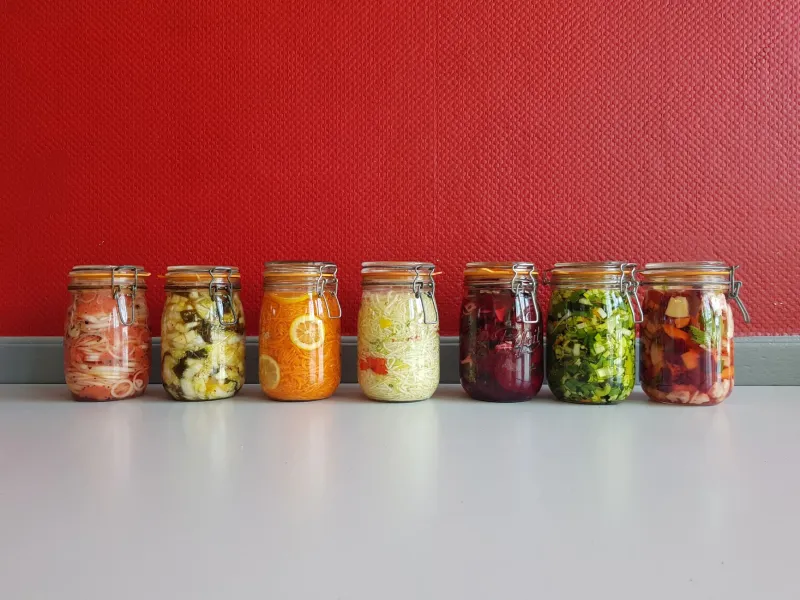
In a modest apartment kitchen in Columbus, Ohio, Renata Osei keeps a spiral-bound notebook filled with temperature logs, pH readings, and tasting notes. She is not a food scientist by training. She is, by profession, a middle school librarian. Yet for the past three years, she has been conducting controlled fermentation trials on West African fermented locust bean—a condiment her grandmother once prepared from memory—and sharing her findings with a network of more than four hundred home cooks scattered across a dozen states.
"My grandmother never measured anything," Osei explains. "She knew it was ready when it smelled a certain way, when the color shifted. I wanted to understand why it worked, so that someone else could reproduce it without having stood in that kitchen for thirty years."
Osei's project is one thread in a much larger fabric. Across the country, informal networks of home cooks are approaching traditional food practices with the methodical curiosity of researchers—documenting variables, comparing results, and building shared repositories of empirical knowledge. What is emerging is a form of collaborative learning that bridges folk expertise with scientific rigor, and that is preserving culinary heritage at genuine risk of disappearing.
The Architecture of a Distributed Kitchen Lab
The movement does not have a single headquarters or a founding charter. It has grown organically through online forums, regional tasting circles, and social platforms repurposed for data sharing. Groups organized around sourdough fermentation, traditional canning, heritage grain milling, and lacto-fermented vegetables have developed their own informal protocols for documentation and peer review.
What distinguishes these communities from ordinary recipe-sharing is their insistence on replicability. Members are expected not merely to report that a dish succeeded, but to record the conditions under which it did so: the ambient temperature of the kitchen, the mineral content of the water used, the age and provenance of the starter culture. Some groups have adopted shared spreadsheet templates; others use dedicated apps originally designed for homebrewing or scientific field work.
Dr. Priya Nambiar, a food systems researcher at a Midwestern land-grant university who has studied several of these networks, describes what she observes as "a genuinely distributed epistemology." "These cooks are doing something epistemologically serious," she notes. "They are triangulating across dozens of independent trials, controlling for variables as best they can, and updating their conclusions when new evidence arrives. That is the scientific method, adapted to a community context."
Validating What Grandmothers Already Knew
A recurring theme across these networks is the effort to translate embodied, tacit knowledge—the kind carried in the hands and noses of experienced home cooks—into language precise enough to be taught to a stranger. The challenge is both technical and cultural.
Many of the techniques under investigation belong to communities whose culinary traditions were never formally documented: enslaved African American cooks whose preservation methods underpinned Southern foodways, immigrant families whose recipes existed only in handwritten cards or oral instruction, Indigenous communities whose food processing knowledge was disrupted by forced assimilation. For these groups, the stakes of documentation extend well beyond culinary preference.
A network of home cooks in the Gulf Coast region has spent two years systematically testing variations on traditional fermented hot sauces, comparing ratios of salt to pepper to vinegar across dozens of family recipes contributed by community members. Their goal is not standardization—they are explicit that regional and family variation is a value to be preserved—but rather the identification of the underlying microbial and chemical principles that make each variation work. The results are catalogued in a publicly accessible digital repository, free to anyone who wishes to consult them.
"We are not trying to flatten the diversity," explains Marcus Tran, one of the network's organizers. "We are trying to understand it well enough that it survives us."
Where Folk Knowledge Meets Peer Review
The integration of scientific thinking into these communities has not been without tension. Some participants resist what they perceive as the medicalization or academicization of practices that derive their meaning precisely from their informality and cultural specificity. Others worry that rigorous documentation could enable commercial appropriation of techniques developed over generations within particular communities.
Those concerns are taken seriously by the most thoughtful organizers. Several networks have developed explicit community ownership agreements, specifying that compiled knowledge belongs collectively to contributing members and may not be licensed or monetized without community consent. Others have partnered with university extension programs or public libraries to ensure that documentation remains accessible and institutionally neutral.
The involvement of libraries, in particular, has proven significant. A number of public library systems have begun hosting what they call "food knowledge labs"—structured monthly gatherings where home cooks share experimental results, receive guidance on documentation methods, and access scientific literature that contextualizes their findings. The model mirrors the citizen science programs that libraries have supported in other domains, from bird population monitoring to water quality testing.
"The library is a natural home for this kind of work," says a program coordinator at a branch library in Portland, Oregon, that launched such a series in 2022. "We exist to make knowledge accessible and to support communities in generating it, not just consuming it."
The Broader Significance of Kitchen Inquiry
What the home food science movement ultimately illustrates is a principle that learning researchers have long understood: meaningful knowledge production is not confined to credentialed institutions. When communities are given tools, frameworks, and encouragement, they are capable of conducting inquiry that is both culturally valuable and empirically sound.
The fermentation trials, the canning safety studies, the heritage grain milling experiments—these are not merely hobbies dressed up in scientific language. They represent a form of collaborative discovery that preserves irreplaceable cultural knowledge, democratizes access to food science, and produces findings that professional researchers have in several cases found genuinely useful.
For Renata Osei, the value is both practical and personal. Her documented locust bean fermentation protocols have now been tested and confirmed by cooks in Atlanta, Minneapolis, and Sacramento. Her grandmother's knowledge, once at risk of vanishing with a single generation, has been rendered portable, reproducible, and shared.
"She never would have called it science," Osei says. "But she would have recognized what we are trying to do. She was always teaching. We are just finding new ways to make sure the teaching doesn't stop."