Before the Wrecking Ball: Citizen Surveyors and the Race to Record America's Disappearing Built Environment
The demolition permit arrives, and with it a countdown. In most American cities, once a building is approved for removal, the timeline from that decision to the date a crew arrives with equipment can be measured in weeks. For the volunteers who have made it their mission to document structures before they disappear, this is the moment that defines their work — not the leisurely survey of a building with decades ahead of it, but the urgent, methodical effort to extract as much information as possible before extraction becomes impossible.
This is the particular pressure that shapes the community of amateur architectural surveyors now active in cities and towns across the United States. They are not, for the most part, trained architects or professional historians. They are retired teachers, software developers, nurses, and small-business owners who have developed a shared conviction: that the built environment is a primary document of American history, and that the portion of it occupied by ordinary buildings — the vernacular structures that never appear on preservation lists — is disappearing faster than any institution can track.
What Gets Saved and What Gets Lost
The formal historic preservation system in the United States operates through a set of criteria established by the National Register of Historic Places, which is administered by the National Park Service. These criteria are not arbitrary; they reflect genuine scholarly thinking about what constitutes historical significance. But they are also, by design, selective. The National Register cannot accommodate every building in every town. The structures it protects tend to be those associated with notable individuals, significant events, or recognized architectural styles.
What this means in practice is that a substantial portion of the built environment — the modest commercial buildings of working-class neighborhoods, the vernacular housing types that document regional construction traditions, the industrial structures that record the labor histories of specific communities — exists outside the protection of formal preservation mechanisms. When development pressure arrives, these buildings are the first to go, and they go without ceremony.
Amateur surveyors are not, in most cases, attempting to stop demolitions. They understand that the legal and economic forces driving urban development are beyond the reach of volunteer documentation projects. What they are attempting to do is ensure that the knowledge embedded in these structures does not disappear entirely — that future researchers, community members, and urban historians will have access to records that would otherwise not exist.
The Tools of the Trade
A generation ago, the kind of documentation that professional architectural historians produced required specialized equipment, formal training, and institutional support. The Historic American Buildings Survey, which has been producing measured drawings and photographic documentation of significant American structures since 1933, has always required exactly this kind of professional infrastructure.
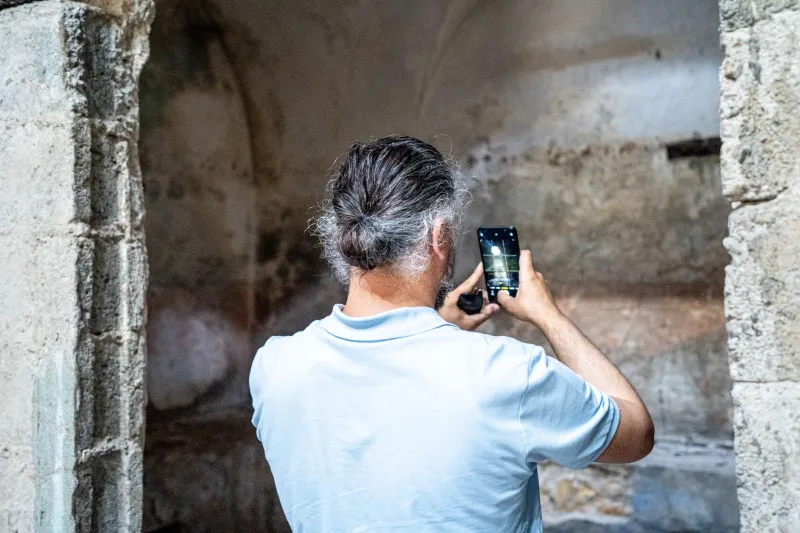
What has changed is the accessibility of the tools. A contemporary smartphone camera produces images of sufficient resolution for meaningful architectural documentation. Free and low-cost photogrammetry software can generate three-dimensional models from overlapping photographs. Geographic information systems that once required expensive licensing are now available as open-source platforms. And the accumulated expertise of the preservation community is increasingly available through online resources, including guides developed by state historic preservation offices and nonprofit organizations specifically to support volunteer surveyors.
The result is a community of practice that has developed its own protocols, shared through online forums, local workshops, and increasingly through formal partnerships with university architecture programs that see in these community projects both a source of useful data and an opportunity for student engagement with real-world documentation challenges.
Hyperlocal Knowledge, Unexpected Discoveries
One of the more striking aspects of amateur architectural survey work is the frequency with which it produces genuinely new historical knowledge — findings that professional historians had not previously identified, not because they were uninterested but because no one had looked closely enough at these particular buildings.
In Baltimore, a volunteer group working to document rowhouses in neighborhoods facing significant redevelopment pressure has identified construction techniques and material sourcing patterns that revise existing accounts of how Baltimore's distinctive housing stock was built and by whom. The group's findings, shared with researchers at the Maryland Center for History and Culture, have prompted academic interest in questions about the labor history of Baltimore's building trades that formal scholarship had not previously addressed.
Similar patterns have emerged in other cities. A group in Albuquerque documenting vernacular adobe construction in neighborhoods undergoing rapid gentrification has accumulated evidence of building practices that blend indigenous Pueblo techniques with Spanish colonial and later Anglo-American influences in ways that existing architectural histories had not fully described. Their photographic and measured documentation has been deposited with the University of New Mexico's Center for Southwest Research, where it is now accessible to scholars working on questions of cultural exchange and material culture in the American Southwest.
These discoveries are not incidental to the work of amateur surveyors; they are, in a meaningful sense, the point. The hypothesis underlying volunteer architectural documentation is that close, patient attention to ordinary buildings reveals things that a focus on exceptional structures misses — that the vernacular built environment is a primary source for histories of labor, migration, cultural exchange, and community formation that cannot be recovered from any other kind of evidence.
Working With Institutions, Navigating Tensions
The relationship between volunteer surveyors and formal preservation institutions is not always straightforward. State Historic Preservation Offices, local landmark commissions, and historical societies vary considerably in their receptiveness to community-generated documentation. Some have developed explicit frameworks for incorporating volunteer survey data into their records; others have been slower to recognize the value of work produced outside professional channels.
The most productive relationships tend to emerge when both parties are explicit about what each can contribute. Volunteer groups bring local knowledge, community relationships, and the capacity for sustained attention to a volume of structures that professional staff could never cover with existing resources. Formal institutions bring archival infrastructure, professional expertise in documentation standards, and the legal authority to act on preservation findings. When these contributions are combined thoughtfully, the results are considerably more significant than either party could achieve independently.
The National Trust for Historic Preservation has recognized this dynamic and has invested in resources to help local preservation organizations develop volunteer survey programs, including guidance on data standards that allow community-generated records to be integrated with existing institutional databases. Several state historic preservation offices have gone further, developing formal volunteer surveyor training programs that certify participants to produce documentation meeting professional standards.
The Permanence of the Record
Buildings, even the most substantial ones, are temporary. The knowledge that they encode — about how people built, how they lived, what they valued, and how they understood their place in the world — need not be. The volunteer surveyors working in American cities and towns today are making a bet that this knowledge is worth the effort required to extract and preserve it, and that future communities will be grateful for the record.
It is a bet that the history of American preservation suggests is well-founded. The structures and records that previous generations thought worth saving have repeatedly proven their value to researchers and communities who came after. The structures and records that were allowed to disappear are, by definition, gone. The work of amateur architectural surveyors is, at its core, an act of faith in the future — a conviction that what is built and inhabited by ordinary people deserves the same quality of attention that has historically been reserved for monuments.