Unearthed by Amateurs: How Citizen Fossil Hunters Are Closing the Gaps in America's Geological Story
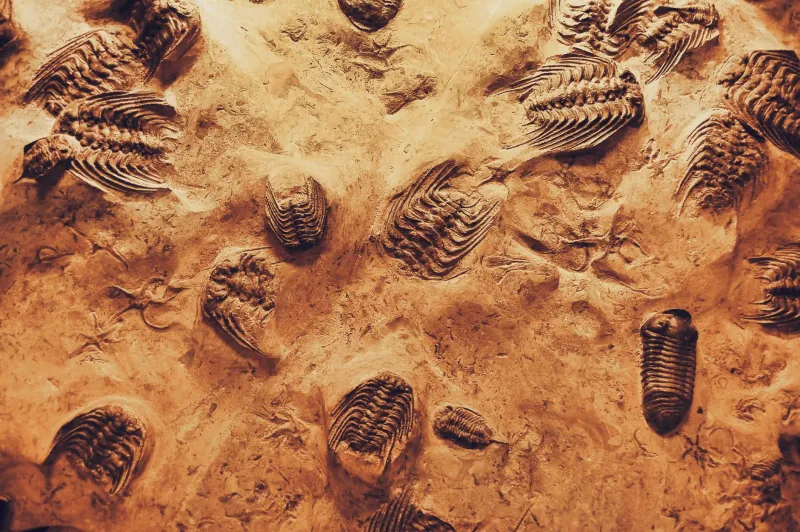
On a Tuesday morning in central Ohio, a retired schoolteacher named Gerald Mast crouched beside a drainage ditch newly carved by a road-widening crew. He had not planned to stop. He was on his way to the hardware store. But a pale, striated fragment jutting from the freshly exposed clay caught his eye—and forty years of weekend fossil hunting told him it was worth a closer look. Within the hour, he had photographed the specimen from six angles, logged its GPS coordinates, and uploaded the data to a regional citizen science portal linked to a state university geology department.
Mast's discovery—a partial brachiopod cluster from the Devonian period—was not, by itself, revolutionary. But it was the forty-seventh submission from volunteer observers in that county over the preceding three years, and when aggregated with the others, it helped researchers identify a previously undocumented fossil bed running beneath a corridor of suburban development. The find made its way into a co-authored paper in a peer-reviewed regional journal. Mast's name appeared in the acknowledgments.
Stories like his are becoming less exceptional and more representative of a quiet but consequential movement reshaping how geological knowledge is produced in the United States.
A Distributed Laboratory Without Walls
Professional paleontologists have long acknowledged a fundamental constraint: the sheer geographic scale of the American landscape makes systematic survey work prohibitively expensive and logistically impractical. Public land surveys, academic field seasons, and museum expeditions can document only a fraction of the territory where fossil-bearing strata are exposed. The result is a geological record full of what researchers candidly describe as blind spots—regions where the rock record exists but has not been observed, cataloged, or interpreted.
Amateur fossil hunters have always operated in this space, often dismissed as hobbyists whose findings lacked scientific rigor. That perception has changed substantially over the past decade, driven by improvements in documentation technology, the emergence of structured volunteer networks, and a growing institutional willingness to treat community-sourced data as scientifically credible when gathered according to consistent protocols.
Organizations such as the Paleontological Research Institution in Ithaca, New York, and various state geological surveys have developed standardized reporting frameworks that allow amateur collectors to submit findings in formats compatible with professional databases. Smartphone applications now guide volunteers through the documentation process—prompting them to record stratigraphic context, photograph specimens against measurement scales, and note the geological formation from which material was extracted. The result is data that, while variable in quality, increasingly meets the threshold required for scholarly consideration.
Where Fossils Appear When No One Is Looking
One of the more striking aspects of this citizen science movement is the geography of discovery. Unlike the dramatic badlands of Montana or the celebrated bone beds of the Morrison Formation, many of the most productive sites being reported by amateur observers are embedded in the ordinary infrastructure of American life.
Construction excavations are among the most reliably productive. When contractors dig foundations, lay utility lines, or grade new roads, they routinely expose strata that have not seen daylight in millions of years. A volunteer network operating across the mid-Atlantic states has established informal relationships with construction firms and municipal planning offices, allowing trained observers to be notified when projects in geologically significant zones break ground. The arrangement is informal and dependent on goodwill, but it has yielded dozens of documented specimens that would otherwise have been destroyed by machinery or buried under concrete.
Creek beds present a different kind of opportunity. Seasonal erosion constantly exposes new material along waterways, and regular walkers—hikers, anglers, birdwatchers—are often the first to notice when something unusual appears. Several universities have capitalized on this by partnering with trail and waterway conservancy groups, training their members to recognize potentially significant material and report it through centralized channels rather than pocketing specimens or leaving them unrecorded.
Roadside quarry exposures, highway cuts, and even the ballast beds of rural railroad lines have similarly yielded significant finds. The common thread is that these are places where the earth's surface is disrupted in ways that reveal what lies beneath, and where the people most likely to notice are not geologists but ordinary residents pursuing ordinary activities.
The Science of Aggregation
Individual specimens reported by amateur observers are rarely transformative on their own. The scientific value of citizen paleontology lies primarily in aggregation—the capacity to combine hundreds or thousands of localized observations into a dataset broad enough to support meaningful analysis.
This principle aligns with a broader shift in how researchers across multiple disciplines are thinking about knowledge production. In ecology, meteorology, and public health, community-sourced data has demonstrated the capacity to reveal patterns invisible to any single research team operating within the constraints of a conventional grant cycle. Paleontology is arriving at a similar recognition, albeit more slowly, given the field's traditional emphasis on specimen quality and the interpretive complexity of stratigraphic context.
Several collaborative projects now explicitly structure their data collection around this aggregative logic. The Fossil Finder Initiative, a multi-institutional partnership operating across the Great Plains, asks volunteers to document not only positive finds but also the characteristics of exposures that yielded nothing—a methodological refinement that allows researchers to distinguish between genuinely fossil-poor formations and areas that simply have not been examined with sufficient frequency.
This kind of negative data, long undervalued in scientific reporting, is proving particularly useful for refining predictive models of fossil distribution—models that help professional researchers allocate their limited field time more efficiently.
Institutional Bridges and Remaining Tensions
The relationship between amateur fossil hunters and professional institutions is not without friction. Questions of specimen ownership, the legal framework governing collection on public versus private land, and disputes over appropriate credit for volunteer contributions have created tensions that no single policy framework has fully resolved.
The National Park Service and Bureau of Land Management maintain strict prohibitions on fossil collection from federal lands without a permit, and enforcement has occasionally created adversarial dynamics with enthusiast communities. Some researchers worry that encouraging amateur activity without adequate legal guidance could inadvertently expose volunteers to liability or—more consequentially—result in the loss of contextual information when improperly extracted specimens circulate through the commercial fossil market.
These concerns are legitimate, and the organizations working most effectively in this space have invested heavily in legal education alongside scientific training. Volunteer orientation programs increasingly include sessions on regulatory compliance, ethical collection practices, and the distinction between documentation—which is universally encouraged—and physical extraction, which requires explicit authorization in many jurisdictions.
Despite these complications, the trajectory of institutional engagement has been broadly positive. More geology departments are formally acknowledging community contributors in their published research. More state surveys are building volunteer observer networks into their long-term data infrastructure. And more professional paleontologists are beginning their field seasons with a review of the amateur-submitted reports that have accumulated since their last visit to a given region.
What the Ground Remembers
The deeper significance of citizen paleontology may lie less in any individual discovery than in what the movement demonstrates about the scalability of collaborative inquiry. The geological record of the United States is vast, complex, and unevenly studied. No institution, however well funded, can observe it comprehensively. But a distributed network of trained, motivated, and carefully guided volunteers—people who walk the same creek beds and drive the same road cuts year after year—can accumulate a form of observational density that professional science alone cannot match.
Gerald Mast, the retired schoolteacher from Ohio, puts it simply. "I've been walking these roads for decades," he said in a recent conversation with a university outreach coordinator. "I know when something looks different. That's not nothing. That's forty years of paying attention."
In a field that measures time in millions of years, forty years of attention is, in geological terms, the blink of an eye. But in the collaborative production of knowledge, it is exactly the kind of sustained, place-based observation that institutions cannot manufacture and communities can.