Listening to What We're Losing: Citizen Sound Recordists and the Acoustic Atlas of American Nature
On a Tuesday morning in late April, a retired schoolteacher in rural Vermont walks to the edge of her property and checks a small weatherproof recording unit she mounted to a fence post three weeks ago. The device has been running overnight, capturing every sound within a quarter-mile radius — the drumming of a pileated woodpecker, the distant rush of a creek swollen with snowmelt, and the conspicuous absence of a wood thrush that sang from this same stand of maples every spring for the better part of a decade. She uploads the audio file to a shared online repository before breakfast.
She is one of thousands.
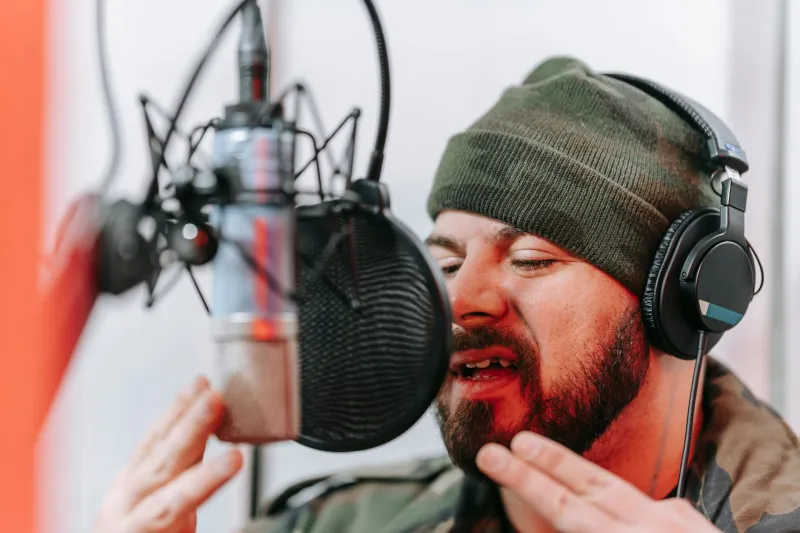
Across the country, from the longleaf pine savannas of the Southeast to the high desert plateaus of the Southwest, ordinary Americans are positioning themselves — and their microphones — at the frontier of a discipline known as bioacoustics. Armed with consumer-grade recording equipment, open-source analysis software, and a willingness to lose sleep, these volunteers are building something that professional researchers have long recognized as essential but rarely had the resources to construct: a distributed, continuous acoustic record of American wildlife and the environments that sustain it.
Sound as Scientific Data
Bioacoustics, the study of sound production and reception in living organisms, has occupied a relatively narrow corner of ecological research for most of its history. The equipment required was expensive, the expertise specialized, and the sheer scale of meaningful landscape-level monitoring was beyond the reach of most research budgets. A single scientist could realistically monitor only a handful of sites.
That calculus has changed substantially. Recording units that once cost several thousand dollars can now be approximated for under one hundred. Software platforms such as Raven Lite, developed at Cornell University's Lab of Ornithology, allow users with no formal training to visualize sound as a spectrogram — a kind of visual fingerprint of audio — and to identify species by their calls. Machine-learning tools, several of them freely available, can now scan hours of recorded audio and flag probable species detections in minutes.
The result is that the barrier to meaningful contribution has dropped to a level accessible to motivated individuals without academic credentials. What remains indispensable is sustained attention and geographic presence — precisely what a distributed volunteer network can provide.
What the Recordings Reveal
The acoustic data being gathered by citizen recordists is yielding insights that extend well beyond simple species lists. Researchers who have begun collaborating with volunteer networks report that continuous audio monitoring can track phenological shifts — changes in the timing of biological events — with a precision that intermittent professional surveys cannot match.
In the Midwest, volunteer recordists monitoring prairie remnants have documented the progressive contraction of dawn chorus windows, the period of peak bird vocalization at sunrise that ecologists use as a proxy for community health. In the Pacific Northwest, recordings from backyard stations near old-growth corridors have captured the encroachment of noise pollution from expanding road networks into previously quiet refugia, a phenomenon with documented consequences for species that rely on acoustic communication to find mates or defend territory.
Perhaps most striking are the absences. Bioacoustic monitoring is uniquely capable of registering not just what is present, but what has gone quiet. Veteran recordists who have maintained stations for five or more years describe a phenomenon they call acoustic thinning — a gradual reduction in the density and diversity of sound that occurs so incrementally it escapes casual notice. Year-over-year comparisons of archived recordings make the trend unmistakable.
The Infrastructure of Listening
The citizen bioacoustics movement has not coalesced in a vacuum. Several institutions have played a foundational role in making distributed acoustic monitoring feasible as a community practice.
The Macaulay Library at the Cornell Lab of Ornithology maintains the world's largest archive of wildlife audio and has actively encouraged amateur contributions for decades. The eBird platform, also administered by Cornell, has established cultural norms around structured data contribution that the bioacoustics community has drawn upon as a model. More recently, platforms specifically designed for acoustic data — including the open-access Wildlife Acoustics repository and the Global Biodiversity Information Facility — have created pathways for volunteer recordings to enter the formal scientific literature.
Community organizations have also played an important role. Regional naturalist groups, land trusts, and watershed councils in states including Minnesota, North Carolina, and Oregon have begun incorporating acoustic monitoring into their conservation programs, providing volunteers with equipment loans, training workshops, and the institutional credibility that makes data sharing with government agencies more straightforward.
Learning to Hear Again
There is an educational dimension to this work that deserves attention independent of its research value. Participants in citizen bioacoustics programs consistently report that sustained listening transforms their relationship to local landscapes in ways that conventional nature observation does not fully replicate.
Learning to identify species by ear requires a different kind of attentiveness than visual identification. It demands patience, repetition, and a willingness to sit with ambiguity. Many participants describe the practice as meditative. Several educators working with middle and high school students have incorporated acoustic monitoring projects into science curricula, finding that the combination of technological engagement and direct sensory experience produces unusually durable learning outcomes.
For older adults, particularly those in rural communities where formal educational resources are limited, involvement in bioacoustic networks has provided access to scientific communities and methodologies that would otherwise remain distant. The knowledge exchange runs in both directions: longtime residents often possess detailed observational histories of local wildlife that can anchor and contextualize the quantitative data their recordings generate.
The Urgency Beneath the Practice
The scientific consensus on the state of American wildlife soundscapes is not reassuring. The 2019 State of the Birds report documented a net loss of nearly three billion birds from North American populations since 1970. Insect populations, which contribute substantially to the acoustic texture of summer landscapes, have declined sharply across multiple studied regions. Amphibian choruses — once a reliable harbinger of spring in wetland habitats throughout the eastern United States — have grown quieter in documented correlation with habitat loss and disease.
The soundscape that a child born today will inherit is measurably diminished from the one that greeted previous generations. Citizen bioacoustics cannot reverse that trend alone. But the movement is producing something that conservation efforts require before any meaningful response becomes possible: an honest, granular, and continuously updated record of what remains, and where.
The retired schoolteacher in Vermont will check her recording unit again tomorrow morning. The wood thrush may yet return. If it does, she will have documentation. If it does not, she will have that too.
Both outcomes matter. Both are worth listening for.