The Telescope on the Porch: Amateur Astronomers and the Collective Science of the Night Sky
When the Neighborhood Becomes an Observatory
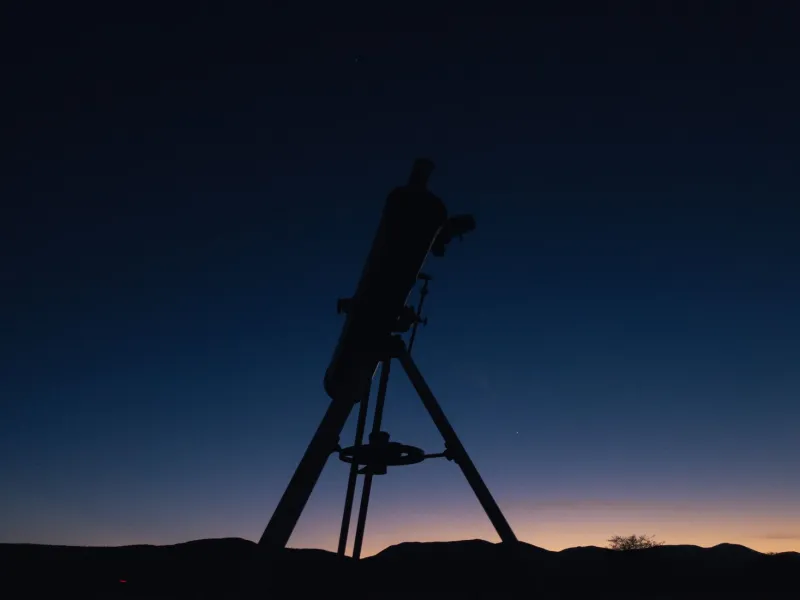
On any clear evening in rural Tennessee, a retired schoolteacher named Gerald sets up a fourteen-inch reflector telescope on the same concrete pad he poured himself fifteen years ago. He is not affiliated with a university. He holds no advanced degree in astrophysics. And yet, by midnight, the observations he records and uploads to a shared international database will be reviewed by professional researchers in at least three countries.
Gerald is one of tens of thousands of citizen astronomers quietly transforming the outer edges of scientific knowledge — not through dramatic discovery, but through the patient, cumulative work of showing up night after night and recording what they see. Across the United States, this loosely organized community is demonstrating that meaningful scientific contribution does not require institutional credentials. It requires discipline, collaboration, and a willingness to participate in something larger than oneself.
What Amateurs Actually Discover
The popular imagination tends to reserve scientific discovery for gleaming professional facilities: the Hubble Space Telescope, the Very Large Array in New Mexico, the newly operational James Webb. These instruments represent extraordinary achievements. But they are also finite resources, subject to competing demands and scheduling constraints that leave vast stretches of the observable sky unmonitored for extended periods.
This is precisely where distributed amateur observation becomes scientifically valuable. Variable stars — stars whose brightness fluctuates over time — require long-term, consistent monitoring to characterize their behavior. Professional observatories cannot dedicate the necessary telescope hours to the thousands of such objects that merit ongoing attention. Organizations such as the American Association of Variable Star Observers (AAVSO), headquartered in Cambridge, Massachusetts, have spent more than a century building infrastructure that allows amateur observers to fill this gap. Their database now contains over fifty million observations contributed by volunteers worldwide, a record that professional researchers draw upon regularly in peer-reviewed publications.
Exoplanet detection represents another frontier where citizen scientists are making genuine inroads. When a planet transits its host star — passing between the star and Earth from our line of sight — it causes a measurable, temporary dimming. Projects affiliated with NASA's citizen science portal have enabled amateur astronomers to confirm and characterize these transit events, providing data that supplements findings from dedicated space-based instruments. The contribution is not symbolic. It is functional.
Light Pollution and the Community Dimension
Perhaps the most consequential work being done by backyard astronomers, however, has less to do with distant stars than with the skies directly above their own homes.
Light pollution — the diffuse artificial brightness that obscures the night sky in and around populated areas — has intensified dramatically over the past several decades. According to research published in the journal Science Advances, more than ninety-nine percent of Americans live under light-polluted skies. The Milky Way is no longer visible to roughly one-third of the global population, including the majority of people living in the continental United States.
Citizen astronomers are increasingly turning their instruments and their attention toward documenting this phenomenon. Using calibrated sky-brightness meters, smartphone applications, and standardized observation protocols, volunteers across the country are building longitudinal records of how artificial light is spreading, intensifying, and shifting spectrally as municipalities transition to LED street lighting. This data feeds into global monitoring initiatives such as Globe at Night, a program coordinated by the National Science Foundation's NOIRLab, which relies almost entirely on public participation to track light pollution trends over time.
But the work does not stop at data collection. In dozens of communities from rural Arizona to suburban New Jersey, amateur astronomy clubs have leveraged their observational findings to engage local governments in meaningful policy conversations. Armed with documented evidence of worsening sky brightness, these groups have advocated for shielded outdoor lighting fixtures, ordinances limiting upward light scatter, and the designation of dark-sky preserves. Several municipalities have responded. The International Dark-Sky Association has certified communities in more than a dozen states as official Dark Sky Places, many of them prompted in part by sustained local advocacy from amateur observers.
The Infrastructure of Collective Inquiry
What makes this movement function is not any single charismatic leader or well-funded institution. It is infrastructure — the quiet, often invisible architecture of shared protocols, open databases, and communication networks that allow dispersed individuals to act as a coherent scientific community.
National organizations provide the scaffolding. The AAVSO supplies standardized observation charts and validation tools. The Astronomical League, based in the United States, offers certification programs that guide amateur observers from basic sky familiarity through advanced technical competency. Online forums and regional star parties — gatherings where enthusiasts convene to observe together and exchange knowledge — provide the social dimension that sustains long-term participation.
Technology has accelerated all of this. Smartphone applications can now automatically identify celestial objects, record observational notes, and transmit data directly to aggregated repositories. Affordable charge-coupled device (CCD) cameras have extended the reach of modest backyard setups, enabling observations that would have required professional-grade equipment a generation ago. The barrier between amateur and professional, while not eliminated, has narrowed considerably.
Learning in the Dark
There is a pedagogical dimension to this work that deserves recognition. Amateur astronomy clubs across the country have become informal educational institutions, transmitting technical knowledge, scientific methodology, and a culture of rigorous observation to new generations of participants. Many club members describe their involvement as the most sustained learning experience of their adult lives — not classroom learning, but the kind that emerges from doing, from failing, from asking questions of more experienced peers, and from the gradual accumulation of hard-won understanding.
Young people are increasingly visible in these communities. School-age participants in programs like Astronomy Clubs of America or local chapter events frequently progress from curious spectators to contributing observers within a single season. The night sky, it turns out, is a remarkably effective classroom — one that requires no tuition, no admission criteria, and no prerequisite beyond the willingness to look up.
A Commons Above Us All
The night sky is, by its nature, a shared resource. It belongs to no institution, no government, no corporation. It is accessible, in principle, to anyone who steps outside after dark and raises their eyes. The community of amateur astronomers in the United States has recognized this commons for what it is — not merely a source of personal wonder, but a site of collective scientific responsibility.
In documenting what they see, in sharing their data, in advocating for the preservation of dark skies, these observers are doing something that transcends hobbyist enthusiasm. They are asserting that knowledge is a public good, that science is a participatory enterprise, and that the work of understanding our universe is not the exclusive province of the credentialed few. One telescope, one porch, one clear night at a time — they are proving themselves right.