Lenses on the Living City: How Amateur Wildlife Photographers Are Crowdsourcing America's Urban Biodiversity Record
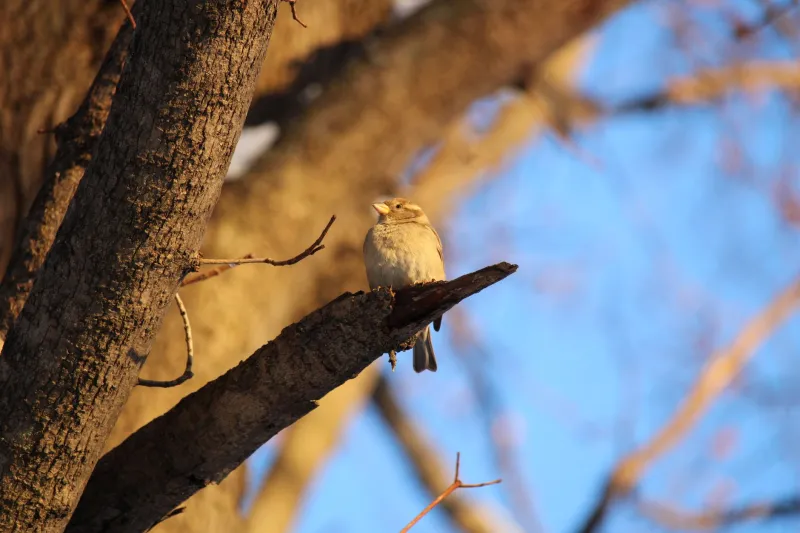
On a Tuesday morning in late spring, a retired schoolteacher in Columbus, Ohio, noticed a Cooper's hawk perched on her backyard fence post. She reached for her phone, snapped a photograph, and uploaded it to iNaturalist within minutes. By afternoon, a professional ornithologist in Tucson had confirmed the identification. By the following week, that single image had become one data point among thousands contributing to a sprawling, collaboratively assembled portrait of wildlife persisting — and in some cases flourishing — inside America's cities and suburbs.
This quiet, distributed act of observation is being repeated millions of times each year across the United States. What was once dismissed as a hobby for birdwatchers in rubber boots is now recognized as something considerably more consequential: a grassroots scientific enterprise generating ecological data at a scale and geographic resolution that no university research program could replicate on its own.
The Scale of What Volunteers Are Building
Citizen science platforms dedicated to biodiversity observation have grown dramatically over the past decade. iNaturalist, a joint initiative of the California Academy of Sciences and the National Geographic Society, has recorded more than 200 million observations globally, with the United States accounting for a substantial portion of that total. The platform's urban and suburban observation nodes — informal clusters of contributors concentrated in metropolitan areas — have become particularly rich sources of data for researchers studying how wildlife adapts to human-dominated landscapes.
What distinguishes this movement from earlier naturalist traditions is the combination of smartphone camera quality, GPS tagging, and machine-learning-assisted species identification. A contributor does not need to possess expert knowledge to make a valid observation. The platform's community verification system, in which multiple experienced users confirm or challenge an identification, functions as a form of distributed peer review accessible to anyone willing to engage seriously with the process.
For professional ecologists, the practical implications are significant. Systematic wildlife surveys are expensive, labor-intensive, and typically limited in geographic scope. A funded research team might survey a handful of urban parks over a single field season. A network of several thousand engaged amateur photographers can document species occurrences across an entire metropolitan region continuously, throughout every season, across years.
Challenging Assumptions About Urban Wildlife
The data being assembled through these collaborative networks is already unsettling some long-held assumptions in urban ecology. Researchers had generally operated under the premise that cities support only a limited subset of generalist species — raccoons, pigeons, house sparrows — while more sensitive wildlife retreats to undisturbed habitats at the urban fringe. The crowdsourced photographic record is complicating that picture considerably.
In Chicago, amateur observers have documented breeding populations of several raptor species, including peregrine falcons and red-tailed hawks, nesting on building ledges and bridge structures throughout the metropolitan core. In Houston, contributors have photographed alligators in retention ponds less than a mile from major commercial corridors. Across the Mid-Atlantic region, a growing body of amateur-captured images is tracking the gradual northward expansion of armadillos into suburban yards — a range shift with direct implications for understanding how climate change is redrawing the boundaries of species distributions.
Perhaps most striking are the records of amphibians and reptiles in densely developed neighborhoods. These taxa are traditionally regarded as highly sensitive to habitat disturbance. Yet urban contributors are documenting five-lined skinks under deck boards in Baltimore, American toads breeding in ornamental garden ponds in Brooklyn, and wood frogs utilizing stormwater detention basins in suburban Minneapolis. Each observation, individually modest, contributes to an aggregate picture that professional researchers are now actively incorporating into conservation planning.
Who Is Doing the Watching
The demographic composition of urban wildlife photography communities reflects both the promise and the ongoing challenges of citizen science as a model for collaborative knowledge production. Participation skews toward homeowners with yards, individuals with reliable smartphone access, and those with sufficient leisure time to engage regularly with observation platforms. These structural factors mean that certain urban environments — lower-income neighborhoods, densely built apartment districts, communities with limited green space — remain underrepresented in the data.
Organizations working at the intersection of environmental education and community development have begun addressing this gap directly. Several urban nature centers and public library systems in cities including Detroit, Philadelphia, and Denver have launched programs providing photography workshops, platform training, and loaner equipment to residents in underserved neighborhoods, explicitly framing participation in biodiversity documentation as both a scientific contribution and an act of civic engagement with one's own environment.
The results of these targeted outreach efforts have been instructive. In neighborhoods where systematic observation had previously been sparse, new contributors frequently document species and habitat conditions that confound prior assumptions — not because the wildlife was absent, but because no one with access to a documentation platform had previously been looking.
The Science That Emerges
Researchers are increasingly publishing peer-reviewed work that relies substantially or entirely on citizen-generated photographic data. Studies examining urban coyote distribution, pollinator communities in residential gardens, and the spread of invasive reptile species across Florida have all drawn on iNaturalist and comparable platforms as primary data sources. The methodological legitimacy of this approach has been validated through comparison studies demonstrating that, with appropriate quality filters applied, community-verified observations achieve accuracy rates comparable to those of professional field surveys.
For ecologists studying long-term biodiversity trends, the temporal depth of the crowdsourced record is particularly valuable. Platforms with multi-year observation histories can reveal how species distributions shift in response to urban development patterns, extreme weather events, and changing land management practices — dynamics that would require decades of dedicated professional monitoring to detect through conventional means.
Knowledge as a Shared Undertaking
What the urban wildlife photography movement ultimately demonstrates is that the boundary between knowledge producer and knowledge consumer is neither fixed nor necessary. The retired schoolteacher in Columbus who photographs a Cooper's hawk is not merely feeding data into a system managed by credentialed experts. She is participating in a collaborative process of discovery in which her observation carries genuine scientific weight, her identification skills can develop over time through engagement with a community of more experienced practitioners, and the cumulative product of her contributions and those of thousands of peers constitutes a public resource of lasting value.
This model — distributed, inclusive, dependent on the sustained engagement of non-specialists — represents one of the more compelling examples of how collaborative networks can advance ecological understanding in ways that institutional science alone cannot. The cities Americans inhabit are more biologically complex than most residents have been encouraged to believe. The growing community of urban wildlife photographers is making that complexity visible, one image at a time.