Suburban Silence Broken: The Amateur Recordists Decoding Animal Conversations in American Backyards
Photo: USFWS/Southeast, Public domain, via Wikimedia Commons
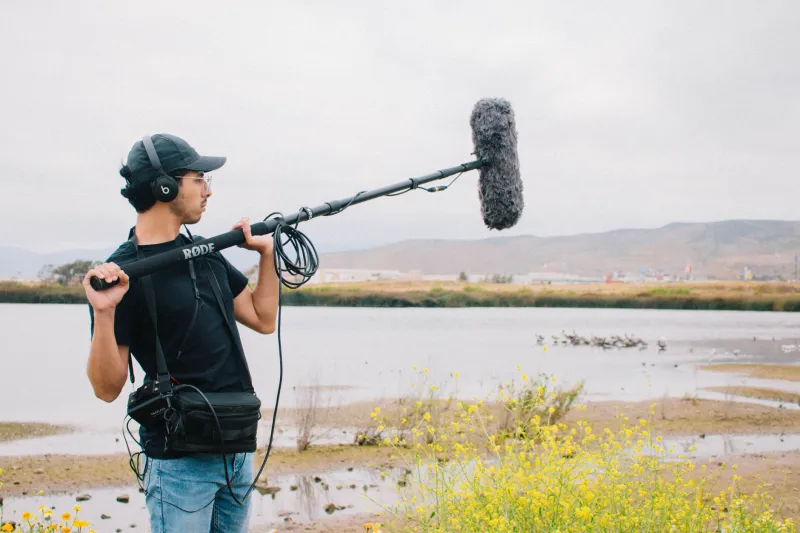
On a Tuesday evening in late September, a retired electrical engineer in suburban Columbus, Ohio, positions a parabolic microphone on the rim of a plastic planter box and presses record. He is not hunting for anything in particular. He is simply listening. By morning, his recorder will have captured eleven hours of ambient sound—wind through oak leaves, the distant percussion of a garbage truck, and, buried beneath it all, a layered exchange of vocalizations between a family of raccoons that will later draw the attention of a behavioral ecologist at a state university three hundred miles away.
This is bioacoustics at the grassroots level, and it is producing results that few anticipated.
From Hobbyist Pursuit to Distributed Science
Bioacoustics—the study of sound production and reception in living organisms—has historically required expensive field equipment, institutional funding, and years of specialized training. Graduate students hauled professional-grade recording arrays into remote forests. Research teams spent months in the field capturing data that might eventually yield a single peer-reviewed paper. The discipline, while scientifically rich, remained largely inaccessible to those without university affiliations.
That barrier has eroded considerably over the past decade. Consumer-grade directional microphones now sell for under two hundred dollars. Free software platforms such as Audacity and Raven Lite allow users to visualize sound as spectrogram images, revealing frequency patterns invisible to the naked ear. Cloud storage has made it practical to archive hundreds of hours of audio without specialized infrastructure. And online communities—spanning Reddit forums, Discord servers, and dedicated platforms like iNaturalist's sound-logging features—have given hobbyist recordists a place to share, compare, and collectively analyze what they are hearing.
The result is something researchers are beginning to take seriously: a distributed listening network that covers geographic terrain no single institution could afford to monitor.
What the Recordings Are Revealing
Perhaps the most striking finding to emerge from amateur bioacoustic communities involves the vocalization complexity of species long assumed to communicate in relatively simple ways. White-tailed deer, for instance, are not typically celebrated for their acoustic repertoire. Yet amateur recordists operating across the mid-Atlantic and Great Lakes regions have catalogued dozens of subtle snort, bleat, and grunt variations that appear to correlate with specific social contexts—nursing behavior, territorial boundary encounters, and responses to novel stimuli in human-modified environments.
Similarly, recordings gathered by hobbyists in the Pacific Northwest have documented previously unreported call sequences in urban coyote populations. Where laboratory studies had characterized coyote communication as relatively stereotyped, the distributed data set assembled by amateur recordists suggested a far more dynamic picture—one in which call structure appeared to vary not just by individual animal but by neighborhood context, proximity to human activity, and time of night.
These are not anecdotal observations. Several citizen-collected data sets have now been formally incorporated into academic research projects, with amateur contributors credited as co-investigators or acknowledged collaborators. The epistemological shift is significant: knowledge about animal communication is no longer generated exclusively within institutions. It is being assembled, piece by piece, in American backyards.
The Infrastructure of Collective Listening
What makes this movement function is not simply the availability of affordable equipment. It is the emergence of shared protocols, communal data standards, and a culture of rigorous peer review among non-credentialed participants.
Several regional bioacoustic communities have developed their own recording guidelines—specifying microphone placement, ambient noise documentation, and metadata tagging practices—that make individual recordings comparable and combinable. Members critique one another's spectrograms with the same seriousness that academic reviewers bring to submitted manuscripts. Misidentifications are flagged, methodology is questioned, and conclusions are held to evidentiary standards that would not embarrass a journal editor.
This internal quality control is precisely what has made amateur recordings credible to professional researchers. When a hobbyist network in the Carolinas submitted a collection of annotated fox sparrow recordings to an ornithology research group, the accompanying documentation was sufficiently thorough that the researchers could integrate the data without re-collection. The amateur contributors had, in effect, done the field work.
Fragmented Landscapes, Fragmented Calls
One of the most consequential threads running through amateur bioacoustic research concerns how urban fragmentation shapes animal communication. As wildlife populations navigate increasingly subdivided habitats—parcels of woodland interrupted by roads, subdivisions, and commercial corridors—their acoustic behavior appears to adapt in ways that carry real ecological implications.
Amateur recordists in metropolitan areas from Phoenix to Philadelphia have documented what some researchers are calling "acoustic code-switching": instances in which individual animals appear to modulate call frequency, duration, or complexity depending on ambient noise levels. Birds near highways produce higher-pitched vocalizations than members of the same species in quieter suburban zones, a phenomenon consistent with published research but now documented at a spatial resolution that institutional studies rarely achieve.
Beyond frequency shifts, some hobbyist communities have begun tracking what they describe as "communication network disruption"—instances in which a call-and-response chain between animals on opposite sides of a road or development boundary appears to break down, with potential consequences for mating behavior, territorial signaling, and predator warnings. Whether these disruptions have measurable population-level effects remains an open question, but the amateur data is providing the granular foundation on which such questions can be rigorously investigated.
Learning by Listening
For participants, the scientific output is only part of the appeal. Many hobbyist recordists describe the practice as a form of sustained ecological education—one that transforms their relationship to the spaces they inhabit daily.
A high school biology teacher in suburban Denver who began recording in her backyard two years ago describes the experience as "learning to read a language I had always been surrounded by but never understood." She now incorporates spectrogram analysis into her classroom curriculum, using recordings gathered within a mile of the school to teach students about frequency, behavior, and habitat ecology simultaneously. Her students, she notes, engage with the material differently when the subject is an animal they have personally heard outside their bedroom windows.
This pedagogical dimension—the way that participatory listening cultivates ecological literacy in ordinary communities—may prove as significant as any individual scientific finding. When people learn to hear their environment with analytical attention, they begin to notice what changes. They become, in the language of environmental education, observant stakeholders.
A Listening Commons
The amateur bioacoustic movement represents something larger than a collection of hobbyist recordings. It represents the emergence of a shared sensory archive—a commons of sound that belongs to no single institution and that grows more valuable as more voices, human and animal alike, are added to it.
Professional researchers who have engaged with these communities consistently note that the greatest contribution of amateur recordists is not any single remarkable capture but the cumulative density of the data. Behavioral ecology depends on sample sizes that individual researchers cannot practically achieve. Distributed listeners, recording simultaneously across hundreds of locations, can.
The challenge ahead lies in formalizing the infrastructure that connects amateur effort to institutional application—developing shared repositories, establishing data-sharing agreements, and ensuring that the communities doing the listening receive appropriate recognition for the knowledge they are generating. Those conversations are already underway in several academic circles, and the hobbyist communities themselves are increasingly sophisticated participants in them.
In the meantime, the recording continues. In Columbus, in Denver, in the Carolinas and the Pacific Northwest, ordinary Americans are pressing record and waiting for the world around them to speak.