Silence as Symptom: How Volunteer Sound Scientists Are Diagnosing America's Forests by Ear
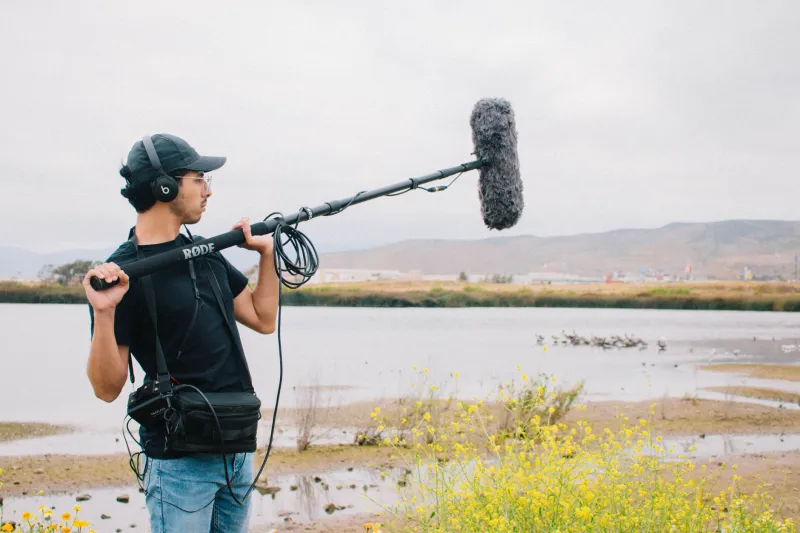
There is a particular kind of quiet that worries ecologists. Not the peaceful stillness of a winter morning, but the absence of sound that should be present—the missing chorus of insects at dusk, the gap where a wood thrush once sang, the forest that hums at a fraction of its former complexity. For decades, detecting and measuring that worrying quiet required expensive equipment, specialized training, and institutional funding. Today, it increasingly requires none of those things.
Across the United States, a loosely organized but rapidly expanding community of volunteers is transforming the science of bioacoustics—the study of sound in living environments—from a narrow academic discipline into a collaborative, community-driven enterprise. Armed with consumer-grade recording devices, open-source software, and machine learning models accessible on a standard laptop, these non-specialists are turning their backyards, hiking trails, and local woodlands into permanent listening stations for environmental health.
What a Forest Sounds Like When It Is Well
To understand what these volunteers are measuring, it helps to understand what a healthy soundscape actually contains. Ecologists divide the acoustic environment into three layers: the geophony, which encompasses non-biological sounds like wind and rain; the anthrophony, which includes human-generated noise; and the biophony, the collective sound produced by living organisms. Within that third layer lies an extraordinary density of information.
A thriving temperate forest in the eastern United States might contain dozens of bird species vocalizing in distinct frequency bands, a continuous insect drone that shifts in character from morning to evening, amphibian calls that signal moisture and temperature conditions, and the occasional mammal moving through the understory. These sounds do not occur randomly. They form what researchers call an acoustic niche—a structured arrangement in which species have, over evolutionary time, divided the sonic spectrum to minimize competition and maximize communication.
When that structure degrades—when insect populations crash, when migratory bird species fail to return, when invasive species disrupt established patterns—the soundscape changes in measurable ways. Acoustic complexity indices, which quantify the diversity and distribution of sound across frequency ranges, drop. Certain frequency bands go quiet. The biophony thins. To a trained ear, or increasingly to an algorithm, the forest begins to sound sick before it looks sick.
The Tools That Made Participation Possible
The democratization of bioacoustics has been driven by convergent developments in hardware and software. Compact, weatherproof recording units that once cost several thousand dollars are now available for under two hundred. Smartphones equipped with high-quality directional microphones can capture usable field audio. Open-source platforms such as BirdNET, developed through a collaboration between Cornell University and the Chemnitz University of Technology, allow volunteers to upload recordings and receive automated species identification within seconds.
Perhaps more consequential is the emergence of acoustic index software—programs that analyze entire recordings not for specific species but for the overall structure and complexity of the soundscape. Tools like Soundscape Indices, available freely online, generate visual representations called spectrograms and calculate values that correlate with biodiversity levels. A volunteer does not need to identify a single species to contribute meaningful data. They need only to record consistently, in the same location, over time.
This shift from identification to indexing has been significant for community learning. Participants who initially feel intimidated by the prospect of recognizing bird calls by ear often find the analytical side of bioacoustics more approachable. Learning to read a spectrogram—to notice the density of vertical lines, the spread of energy across frequency bands, the gaps that indicate absence—is a skill that can be taught in an afternoon workshop and refined through repeated practice.
Building the Collective Record
The value of volunteer bioacoustics lies not in any single recording but in the accumulation of thousands of recordings taken across varied locations and seasons. Professional ecologists typically lack the resources to monitor more than a handful of sites simultaneously. A distributed network of committed volunteers can cover an entire watershed, a regional forest system, or a migratory corridor in ways that no single research institution could replicate.
Several collaborative platforms have emerged to aggregate and analyze this community-generated data. The Macaulay Library at Cornell's Lab of Ornithology maintains one of the world's largest repositories of wildlife audio, and it actively solicits contributions from non-professionals. The Global Biodiversity Information Facility incorporates acoustic data alongside visual observations. Regional programs, often organized through land trusts, nature centers, or university extension offices, coordinate local monitoring efforts and provide participants with standardized protocols to ensure that data collected in different locations remains comparable.
The learning dimension of these collaborations deserves particular attention. Participants frequently describe a progression from casual curiosity to genuine scientific engagement. Beginning volunteers may start by simply recording their morning walk. Over weeks and months, they begin to notice patterns—a particular species that appears only in early May, a stretch of trail where acoustic complexity is consistently lower than surrounding areas, a site that seems to be recovering after a period of disturbance. These observations generate questions, and questions generate deeper learning.
Diagnosing Decline, Documenting Recovery
The diagnostic potential of community bioacoustics has drawn serious interest from conservation organizations and government agencies. In regions where insect population collapse has been documented through other methods, acoustic monitoring provides a complementary and often earlier signal of decline. The loss of nocturnal insect sound—the crickets, katydids, and moths that once produced a constant summer soundtrack across much of rural America—is now measurable by volunteers who have established baseline recordings over multiple seasons.
Forest recovery, too, leaves an acoustic signature. Sites undergoing ecological restoration, where invasive species are being removed and native plantings established, show measurable increases in acoustic complexity over time. Volunteers who have monitored a recovering site for several years can observe in their data what they may also perceive intuitively: the forest is beginning to sound like itself again.
This capacity to document both decline and recovery gives community bioacoustics a particular relevance for advocacy and policy. When volunteers present local officials or land managers with multi-year acoustic records demonstrating change at specific sites, the data carries a weight that anecdotal observation cannot. Numbers, visualized on a spectrogram, make a compelling case.
The Education That Happens in the Listening
Beyond the scientific contribution, there is an educational transformation that occurs in the act of sustained, attentive listening. Volunteers who commit to regular acoustic monitoring report a deepened relationship with their local environment—a heightened awareness of seasonal change, a sensitivity to subtle shifts in species presence, and a more visceral understanding of what ecological health and ecological loss actually mean.
This experiential learning is difficult to replicate in a classroom. It is grounded in place, extended over time, and motivated by genuine curiosity and care. It produces not only data but citizens who are more informed, more engaged, and more capable of participating in the conversations that will shape the future of American landscapes.
The forest has always been speaking. The work now is to ensure that enough people are listening—and that what they hear is recorded, analyzed, shared, and acted upon before the silence becomes permanent.