Stone by Stone: How Amateur Genealogists Are Transforming America's Cemeteries Into Living Archives
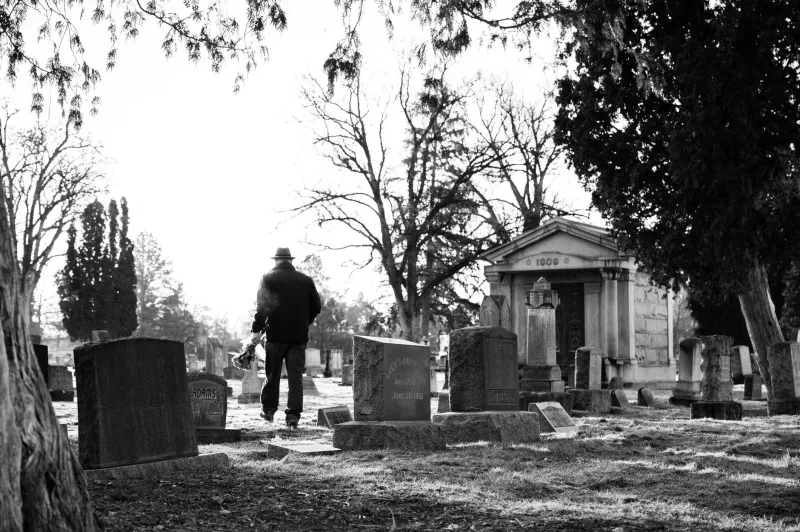
On a cool Saturday morning in rural Ohio, a retired schoolteacher named Margaret Forsythe kneels beside a limestone marker so eroded that its inscription is barely legible. She carries a soft brush, a bottle of distilled water, and a smartphone equipped with a high-resolution camera. She is not a professional archaeologist. She holds no academic appointment. Yet the photographs she takes today, carefully tagged with GPS coordinates and cross-referenced against county deed records, will be uploaded before nightfall to a collaborative database accessible to researchers, families, and historians across the country.
Forsythe is one of tens of thousands of Americans who have quietly transformed themselves into what scholars of public history are beginning to call "community archivists" — individuals whose voluntary, methodical documentation of burial grounds is producing genealogical records of remarkable depth and breadth. Their collective effort is changing the landscape of historical research, one gravestone at a time.
The Cemetery as a Primary Source
Burial grounds occupy a peculiar position in American historical consciousness. They are simultaneously ubiquitous and overlooked — present in virtually every township and county in the nation, yet rarely treated as the rich documentary resources they genuinely are. For genealogists, however, a cemetery is among the most information-dense environments imaginable. A single headstone may record a birth year, a death date, a spousal relationship, a military service, a religious affiliation, and a family surname that connects to dozens of living descendants.
When those stones are lost — to weather, neglect, vandalism, or the slow encroachment of vegetation — so too are the stories they encode. Amateur genealogists have increasingly recognized that the window for capturing this data is narrowing. Marble and sandstone markers that survived two centuries of American weather are now succumbing to acid rain and soil subsidence at accelerating rates. The urgency this creates has transformed what was once a solitary hobby into something resembling a coordinated preservation movement.
Crowdsourcing the Historical Record
Platforms such as Find A Grave and BillionGraves have provided critical infrastructure for this movement, enabling volunteers to upload photographs, transcriptions, and biographical notes that are linked to searchable global databases. As of recent estimates, Find A Grave alone hosts records for more than two hundred million individuals, the vast majority of them contributed by unpaid volunteers. The scale of this collective undertaking rivals — and in some domains surpasses — what any single institution could accomplish.
But the most compelling work is often happening at a more granular level, in local genealogical societies and county historical associations where volunteers coordinate systematic surveys of neglected burial grounds. In these settings, the process is deliberately collaborative. Teams divide responsibility for different sections of a cemetery, cross-check one another's transcriptions for accuracy, and pool knowledge about regional naming conventions, immigration patterns, and local land records that give context to individual graves.
This collaborative methodology reflects a principle that learning scientists have long recognized: distributed expertise, when properly organized, consistently outperforms isolated individual effort. The genealogist who has spent forty years researching German immigrant families in Wisconsin brings knowledge to a cemetery survey that no database algorithm can replicate. When that expertise is shared openly and systematically, the resulting archive is qualitatively richer than the sum of its parts.
Recovering the Overlooked
Perhaps the most consequential dimension of this movement is its capacity to recover histories that formal institutions have systematically neglected. African American burial grounds, in particular, represent an area where volunteer documentation has proven transformative. Across the South and in communities throughout the Midwest, cemeteries established by freed people after the Civil War were frequently excluded from official county records, left off maps, and allowed to deteriorate without municipal support.
Volunteer groups — often composed of both descendants and allied researchers with no direct familial connection to the buried — have located hundreds of these sites using a combination of oral history interviews, land survey archives, and aerial photography analysis. Once located, the documentation process itself becomes an act of historical redress. Transcribing the name of a person who was once legally denied personhood, and placing that name in a permanent, publicly accessible digital record, carries a moral weight that participants describe in terms that go well beyond the technical.
Similar patterns hold for Indigenous burial sites, immigrant community cemeteries, and the graves of individuals who were institutionalized — in poorhouses, asylums, or state hospitals — whose deaths were recorded only in administrative ledgers that have since scattered or disappeared. Amateur genealogists, working with local archives and university history departments, have begun to reconstruct these records, giving names back to people whose identities were stripped from them in life and in death.
The Question of Method
The growing legitimacy of this work has prompted productive conversations about standards and methodology. Unlike professional archivists operating within institutional frameworks, volunteer genealogists bring widely varying levels of training to the field. A transcription error — misreading an archaic script, conflating two individuals with similar names, or incorrectly interpreting an abbreviation — can propagate through a digital database and mislead researchers for years.
Responsible organizations within the movement have responded by developing training resources, peer-review protocols, and style guides that bring greater consistency to volunteer contributions. Some genealogical societies now partner formally with state archives and university libraries to establish shared standards, creating a hybrid model in which amateur energy and institutional expertise reinforce rather than undermine each other. This kind of structured collaboration represents a mature evolution of the citizen-research model — one that preserves the democratic accessibility of the work while attending seriously to questions of accuracy and accountability.
What the Stones Remember
There is something philosophically significant about the act of kneeling before a worn stone and choosing to make its inscription legible again. It is, at its core, a declaration that the person commemorated there still matters — that their existence is worth the effort of recovery. For the families who discover, through a volunteer's uploaded photograph, the grave of a great-great-grandparent they had spent years searching for, that declaration is not abstract. It is the resolution of a long uncertainty, the closing of a gap in a family's understanding of itself.
For the broader culture, the collective work of amateur cemetery documentarians is building something equally valuable: a more complete, more honest, and more inclusive account of who has actually lived in this country. The official historical record has always been shaped by the priorities and blind spots of those with the power to create it. Community archivists, working stone by stone across ten thousand burial grounds, are quietly but persistently correcting that record — and in doing so, demonstrating that the advancement of knowledge is not the exclusive province of credentialed institutions. It belongs, as it always has, to anyone willing to do the work.