The Seed Cabinet: How Volunteer Lenders Are Preserving Regional Food Memory
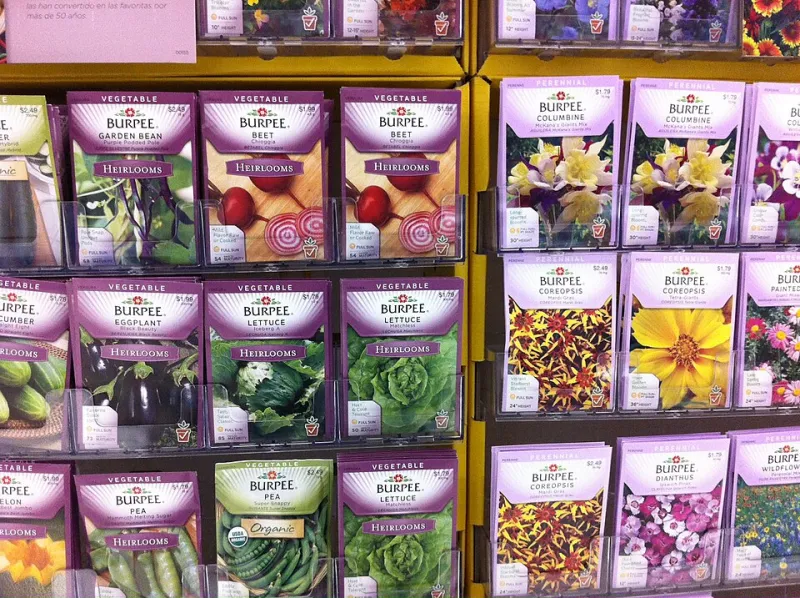
Photo: ParentingPatch, CC BY-SA 3.0, via Wikimedia Commons
The smallest public library in a town may fit inside a card catalog. A seed library can be even smaller: a set of drawers, a binder, a few labeled envelopes, and a sign-up sheet. Yet the scale is deceptive. When volunteers lend tomato, bean, pepper, or squash seed that has been saved and adapted in a particular region, they are circulating more than a garden supply. They are circulating local evidence about what survives.
Heirloom seed libraries have multiplied across the United States in libraries, community centers, granges, and extension offices. Their basic transaction is simple: a gardener borrows seed, grows a plant, saves seed from the best performers, and returns a portion to the library. The best-run programs add another layer: growers' notes. When those notes are collected and organized, the seed cabinet becomes a collaborative record of regional food memory.
More Than a Packet Exchange
A seed library is often described as a lending institution, but the metaphor only goes so far. Seeds are not returned in their original form; they are returned as offspring, shaped by a season of weather, soil, pests, and human selection. Each successful return is a small experiment with a result. Each failure is also information, though it is less often recorded.
Volunteer stewards have learned that the paperwork matters as much as the packets. A catalog that lists only variety names is an inventory. A catalog that records who grew what, where, and under which conditions becomes a learning resource. Did the bean mature before the first frost? Did the pepper set fruit in a hot summer? Did the squash resist mildew long enough to save seed? These observations are not laboratory data, but they are local and cumulative.
The Catalog as Common Property
The most interesting seed libraries treat their catalogs as common property. Entries are not merely descriptions of varieties; they are a shared memory of cultivation. A note that a certain lettuce bolted early in three consecutive seasons is useful to the next grower. A record that a bean performed well in heavy clay soil may matter more than a generic description from a seed company.
This is where the model departs from ordinary borrowing. The library does not simply distribute knowledge from the top down. It gathers knowledge from the ground up, then returns it to the community in a more organized form. Extension agents, Master Gardeners, tribal seed keepers, and cultural groups can all contribute, but the catalog is strongest when it reflects many gardens rather than a single expert voice.
Grower Notes and Local Evidence
Grower notes are not a substitute for formal trials. They are anecdotal, uneven, and vulnerable to missing data. Yet they can reveal patterns that a regional planting guide cannot capture. A neighborhood with unusual microclimates may discover that a variety marketed for one zone performs differently on its streets. A community garden may learn that a particular pepper survives with less water than expected. These findings are provisional, but they are also grounded in place.
For volunteers, the challenge is making note-taking easy enough to sustain. A short form at checkout and return can work better than an elaborate database that no one maintains. Photographs, dates, and a few plain-language observations often prove more useful than technical language. The goal is not perfect science. It is a usable record that helps the next gardener make a better decision.
Partnerships Across Institutions
Seed libraries rarely thrive in isolation. Public libraries provide space and credibility. Extension offices offer horticultural advice. Community centers connect growers who may not use traditional library services. Cultural organizations help preserve varieties with specific culinary or family significance. In some cases, tribal communities are leading the work on their own terms, ensuring that seed stewardship remains tied to sovereignty and cultural practice.
These partnerships require care. A seed library should not extract local knowledge without reciprocity. It should ask what growers want from the catalog, how their notes will be used, and who will benefit from the record. The most durable programs build governance around those questions rather than assuming that open access alone is enough.
Climate Adaptation Without a Master Plan
It is tempting to describe seed libraries as a climate adaptation strategy. In a limited sense, they are. Locally adapted varieties and shared observations can help gardeners respond to shifting seasons, extreme heat, and unpredictable moisture. But the work is decentralized and incremental. It does not replace crop research, public investment, or coordinated adaptation planning.
What it does offer is a form of community-owned evidence. When a region's growers document which varieties succeed under stress, they create a record that can inform future planting decisions. That record is not a policy document, but it is a resource. It allows learning to accumulate in the places where food is actually grown.
The seed cabinet, in this view, is not a museum of old varieties. It is a working collection. It changes as growers save, select, and share. Its value lies less in the purity of any single heirloom than in the relationships that keep the collection alive—between gardeners, institutions, and the ordinary seasons that test what the catalog claims.