Reading the Minutes: How Volunteers Make Local Government Legible
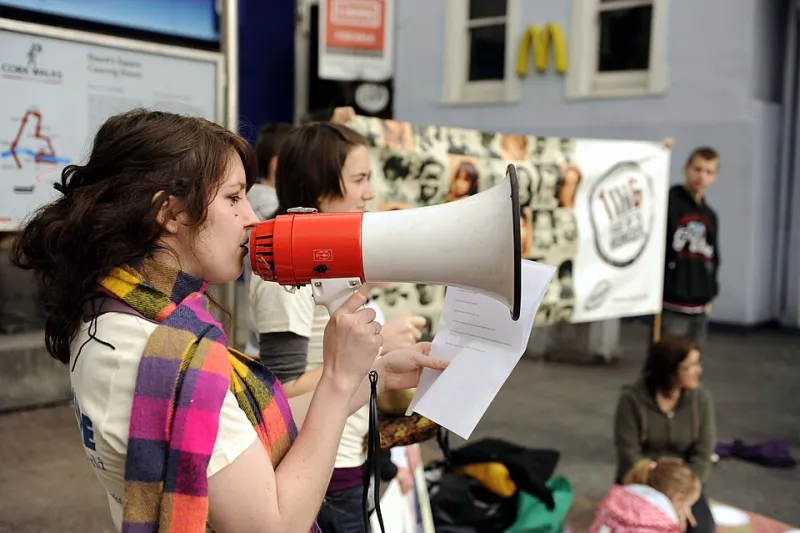
Photo: Trocaire from Ireland, CC BY 2.0, via Wikimedia Commons
Local government is often described as the level closest to daily life, but its records can feel remote. A city council packet may run to hundreds of pages. A school board agenda may bury a consequential budget transfer in a consent calendar. A zoning variance may turn on a phrase that few residents recognize. The documents are public. They are not always legible.
A growing civic-literacy movement is trying to close that gap. Volunteers in libraries, community centers, and neighborhood associations host read-your-records workshops. Participants learn how to find minutes, budgets, ordinances, and public-comment transcripts; how to trace a decision from agenda to vote; and how to ask questions that local officials can actually answer. The aim is not to turn residents into policy experts overnight. It is to make the ordinary machinery of local government visible enough to participate in.
Why Minutes Matter
Minutes are the basic ledger of local decisions. They record what a body considered, what it voted on, and sometimes who said what. They are rarely written for a general audience. Abbreviations, procedural language, and references to prior meetings can make them hard to follow. Yet minutes are often the most accessible entry point into the record. They show how an issue moved from a request to a recommendation to a vote.
Budgets are equally important and often less inviting. A municipal budget is not only a financial document; it is a statement of priorities. A workshop can help residents follow a single line item across departments, understand the difference between capital and operating spending, and see where public comment actually influenced a decision. The goal is not to master every number. It is to learn how to ask a precise question about one.
From Dense Record to Learning Material
Volunteers who run these workshops do not usually produce new documents. They translate existing ones. A facilitator might take a recent council agenda and create a one-page guide: what is being decided, who is affected, what the staff report recommends, and where residents can find the relevant exhibits. Another might annotate a set of minutes to show how a motion was amended before it passed.
The translation has limits. A summary is not the record itself. Volunteers should point participants back to the source and explain what has been omitted. The best materials distinguish between fact, inference, and opinion. They also avoid the temptation to turn every workshop into a campaign. Civic literacy is not the same as advocacy, even when participants care deeply about an outcome.
A Workshop Model
A typical read-your-records session runs ninety minutes. The first half introduces the documents: where they are posted, how to search them, and how to read a consent agenda. The second half focuses on a real local item. Participants work in small groups to identify the decision, the timeline, and the points where public input could matter. A facilitator then models how to submit a comment or ask a question at a public meeting.
Libraries are natural hosts for this work. They provide neutral space, public computers, and staff who understand information access. Some workshops partner with the League of Women Voters, local journalism outlets, or university civic-engagement programs. Others are entirely volunteer-run. The common ingredient is a commitment to teaching a repeatable process rather than delivering a one-time briefing.
What Residents Learn
Participants often leave with a more concrete sense of how local government works. They learn that a public hearing is not the only moment for input. They learn that a budget transfer may require a vote at a regular meeting. They learn that the difference between an ordinance and a resolution matters. These are not glamorous lessons, but they reduce the distance between frustration and effective participation.
The workshops can also build a habit of reading the record after the meeting. A resident who knows how to find the minutes and the vote tally is less dependent on secondhand summaries. That habit supports accountability without requiring anyone to attend every meeting. It also helps neighbors compare notes and share what they have learned.
The Limits of Translation
Civic-literacy volunteers cannot solve every barrier. Records may be incomplete, poorly formatted, or available only in formats that are hard to search. Local governments may lack staff to produce accessible summaries. Language access remains uneven. A workshop can explain the process, but it cannot guarantee that the process is fair or that public comment will change a decision.
Volunteers should be candid about those limits. The point is not to promise influence. It is to make the record usable enough that residents can decide for themselves whether and how to engage. That distinction protects the work from cynicism and from overpromising.
A Civic Habit
Read-your-records workshops are modest by design. They do not require a large budget or a new institution. They require a room, a few committed volunteers, and a willingness to walk through public documents line by line. Over time, those sessions can create a local culture of reading the record—not as a specialized skill reserved for insiders, but as an ordinary civic habit.
For learning institutions, the lesson is familiar. Access to information is not the same as understanding it. The space between the two is where teaching happens. By turning minutes and budgets into workshop materials, volunteers are helping towns read their own government and, in the process, making collaborative discovery a part of local public life.