Paint, Place, and the Public Record: How Citizen Archivists Are Preserving Street Art as Community History
The Ephemeral as Evidence
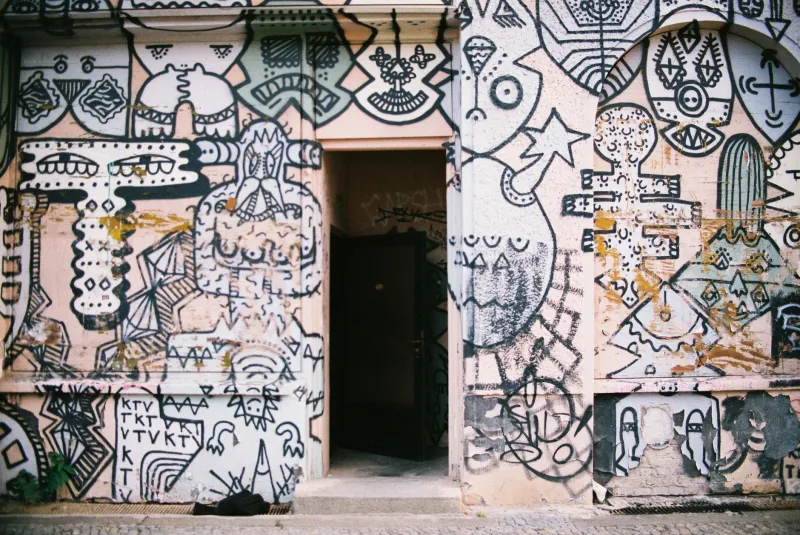
Historians have long grappled with the problem of the ephemeral: the spoken word, the gesture, the temporary structure, the informal gathering—all of the human activity that leaves no durable trace in the archives that institutions maintain. Street art belongs to this category in a particularly acute way. A mural painted on a warehouse wall in 1987 may have been photographed by thousands of passersby, celebrated in local newspapers, and remembered by a generation of neighborhood residents, yet leave no entry in any museum catalog, no accession record in any archive, no entry in any official history of the place.
For a growing community of citizen archivists working across American cities, this absence is precisely the problem they have set out to address. Armed with cameras, notebooks, and an increasingly sophisticated array of digital tools, they are building systematic records of street art and graffiti that treat the painted wall as a primary historical source—as legitimate, in its own way, as the written document or the architectural drawing.
The Practice of Visual Documentation
The documentation methods employed by these amateur historians vary in sophistication, but share a common commitment to systematic coverage. At the most basic level, a citizen archivist conducts regular walks through defined geographic areas, photographing every mural, tag, paste-up, and stenciled image encountered. Photographs are geotagged, timestamped, and organized by location, creating a visual inventory that can be revisited over time to track changes—new work added, old work painted over, walls demolished.
More advanced practitioners supplement photography with research. They identify artists through stylistic signatures, community contacts, and social media, then document the circumstances of specific works: the occasion for a commemorative mural, the organizational sponsorship behind a community art project, the political context of a piece that responded to a specific local event. This contextual layer is what transforms a photograph of a painted wall into a genuine historical record.
In Los Angeles, volunteers associated with the Mural Conservancy have spent years building a database of the city's public murals that now encompasses thousands of entries, each linked to photographs, artist information, and historical notes. The archive has become a reference resource for journalists, documentary filmmakers, urban historians, and descendants of artists seeking records of their relatives' work.
In Philadelphia, a city with one of the most extensive public mural programs in the country, independent documentarians have worked to capture not only the officially commissioned works but the unofficial, unsanctioned pieces that official records systematically exclude—the graffiti that predated the mural arts movement, the tags that mark the social geography of neighborhoods in ways that no authorized artwork could.
Graffiti as Historical Document
The inclusion of graffiti—as distinct from formally commissioned murals—is where citizen street art archivists most directly challenge mainstream assumptions about what constitutes legitimate historical material. Graffiti has been treated, for most of its modern history in the United States, primarily as a problem of public order: something to be removed, suppressed, and penalized. The cities that invested most heavily in anti-graffiti programs during the 1980s and 1990s were, from the perspective of cultural history, engaged in a systematic erasure of documentary evidence.
Citizen archivists working in this tradition argue that graffiti writing, particularly the elaborate style-based work that emerged from New York in the 1970s and spread across the country, constitutes a coherent artistic and cultural movement with its own history, aesthetics, and social significance. The tags and pieces that covered subway cars and building walls were not random vandalism but a sophisticated system of visual communication, identity assertion, and community marking—one that documented the circumstances of the communities from which it emerged with a directness that few official sources could match.
Documenting that work now, decades after much of it has been destroyed, requires the kind of detective work that historians of any ephemeral cultural form must undertake: interviewing participants, recovering photographs from private collections, cross-referencing dates and locations, and piecing together a narrative from fragmentary evidence. Several citizen archivists working on early hip-hop-era graffiti history have produced research that is indistinguishable, in its rigor, from academic scholarship—and that has been cited by museum curators and documentary filmmakers as foundational to their own work.
The Race Against Demolition and Paint
The urgency driving citizen street art documentation is, in part, the same urgency that motivates other forms of community archiving: the awareness that the record is being destroyed faster than it can be captured. Neighborhoods undergoing rapid development see their building stock replaced at a pace that outstrips any institutional preservation effort. Murals painted on the walls of structures slated for demolition are simply lost when the wrecking ball arrives—unless someone has photographed them first.
The problem is compounded by the practice of anti-graffiti abatement, which in many cities operates on a rapid-response model that removes unauthorized work within days or hours of its appearance. For citizen archivists attempting to document graffiti as a living practice, the window for documentation can be extraordinarily narrow. Some have developed alert systems—networks of contacts in neighborhoods they monitor who notify them when significant new work appears—that allow rapid response documentation before abatement crews arrive.
Digital platforms have been essential to this work. Shared databases, collaborative mapping tools, and social media networks allow citizen archivists to coordinate coverage, avoid duplication, and pool their photographic resources in ways that no individual could manage alone. The collaborative dimension of the work is not incidental; it is what makes comprehensive documentation possible at all.
Preservation, Access, and the Question of Consent
The ethics of street art archiving are genuinely complex. Artists who create unauthorized work often have complicated relationships with documentation: some welcome the visibility that a well-maintained archive provides, while others are concerned about the legal implications of having their work permanently associated with their names in a public database. The question of consent—whether an artist must agree to have their work archived, and in what form—is one that thoughtful practitioners navigate with care, developing community norms rather than institutional policies.
Questions of access are equally nuanced. An archive that is fully public may serve researchers and historians while exposing artists to unwanted scrutiny. An archive that is restricted may protect individuals while limiting the educational value of the collection. Most citizen archivists operate somewhere between these poles, making case-by-case decisions guided by their knowledge of the communities they document.
What is not in question is the historical value of the record they are building. The walls of American cities have always been surfaces on which communities wrote their own stories—in protest, in celebration, in grief, and in the assertion of presence. The citizen archivists photographing those walls are ensuring that those stories, however inconvenient or unofficial, become part of the permanent record of American life.