Mapped in Memory: How Neighbor-Led Digital Projects Are Turning Ordinary Streets Into Living Historical Records

Photo: Staff Sgt. Timothy Koster, Public domain, via Wikimedia Commons
When the Storefront Remembers
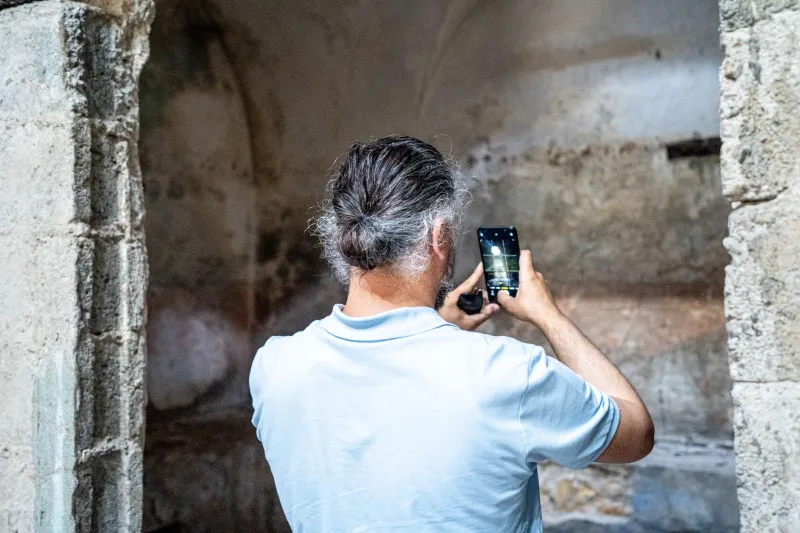
On a commercial block in Louisville, Kentucky, a faded brick building that once housed a Black-owned pharmacy now sells insurance. To a passing commuter, it reads as ordinary urban fabric. To members of a neighborhood preservation group called the Russell Remembrance Collective, it is a portal. Affixed near the entrance is a small weatherproof sticker bearing a QR code. Scan it, and a smartphone screen fills with photographs, oral history recordings, and handwritten receipts digitized from a shoebox donated by the pharmacist's granddaughter. The building has not changed. The story attached to it has simply become audible again.
This kind of hyperlocal digital archiving is no longer a novelty. From the post-industrial blocks of Gary, Indiana, to the rapidly gentrifying corridors of East Austin, Texas, neighbor-led coalitions are systematically transforming the built environment into an interactive record of collective memory. Using tools that require no specialized training—free mapping platforms, open-source content management systems, and the cameras already in residents' pockets—these groups are asking a fundamental question: who decides which histories are worth keeping?
The Architecture of Decentralized Memory
Traditional archiving has long operated through centralized institutions: libraries, historical societies, municipal record offices. These repositories perform essential work, but they are constrained by acquisition policies, staff capacity, and, critics argue, the cultural biases of their founders. A courthouse archive may hold meticulous records of property transfers while containing almost nothing about the families who were displaced to make those transfers possible.
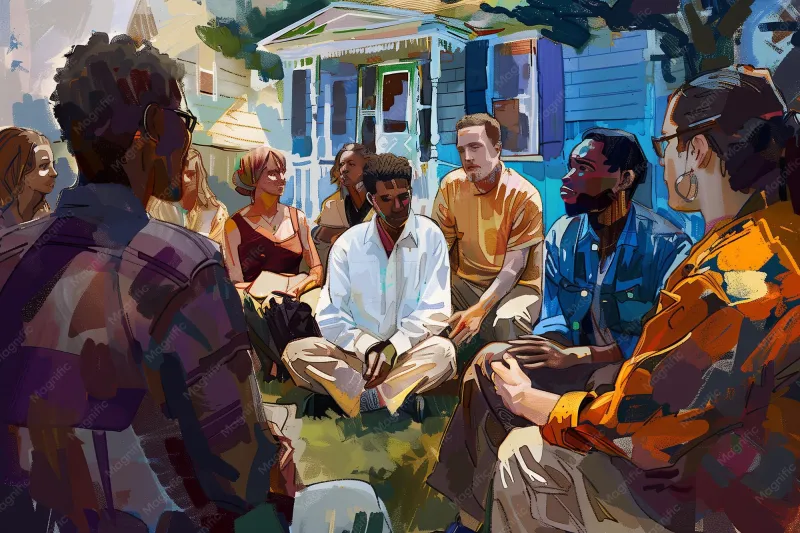
Decentralized community archiving operates on a different logic. Rather than waiting for materials to be donated to an institution, volunteer archivists go directly to the source—interviewing elderly residents, photographing building facades before demolition permits are filed, scanning documents from kitchen drawers—and anchor the resulting content to a precise geographic coordinate. The archive is not housed in a single building. It is distributed across the landscape itself.
Several open-source platforms have emerged to support this model. Historypin, developed by a UK-based nonprofit, allows users to pin photographs and audio recordings to specific map locations, creating layered timelines that show how a single corner has changed over decades. Mukurtu, designed in collaboration with Indigenous communities, offers more granular control over who may access sensitive cultural materials. ArchivesSpace, originally built for professional archivists, has been adapted by community groups seeking more institutional-grade metadata standards without institutional gatekeeping.
Pilots, Partnerships, and the Question of Permanence
In Detroit, a coalition of block clubs partnering with Wayne State University's library school has spent two years tagging more than three hundred sites across four historically Black neighborhoods with QR-linked digital entries. Each entry was written collaboratively—residents drafted the narrative, library students provided metadata training, and a local historian reviewed for factual accuracy. The project, called the Detroit Doorstep Archive, has drawn contributions from more than four hundred individual residents and logged over twelve thousand unique scans since its public launch.
What distinguishes efforts like the Detroit Doorstep Archive from casual social media documentation is the deliberate application of archival standards to community-generated content. Participants are trained to record provenance—where a photograph came from, who took it, when, and under what circumstances. Audio recordings are transcribed and tagged by subject. Materials are stored in redundant cloud repositories with open licensing agreements that prevent any single entity from claiming exclusive ownership.
Permanence, however, remains a genuine challenge. Digital files degrade, platforms sunset, and volunteer energy fluctuates. Several projects have addressed this by establishing formal deposit agreements with university libraries or state historical societies, ensuring that community-generated content enters the permanent record even if the originating organization dissolves.
Democratizing the Editorial Decision
Perhaps the most consequential dimension of these projects is not technological but political. Every archive embeds editorial decisions: what to include, how to describe it, whose perspective is treated as authoritative. In conventional institutions, those decisions are made by credentialed professionals operating within established disciplinary frameworks. In community archives, they are made collectively, through processes that vary by project but typically involve neighborhood meetings, open comment periods, and rotating editorial committees.
In the Pilsen neighborhood of Chicago, a predominantly Mexican-American community facing sustained development pressure, a group called Pilsen Memory Works has formalized this process into a written editorial charter. Any resident may submit content. Submissions are reviewed by a five-person committee elected annually from among contributing members. Disputes about framing or accuracy are resolved through a documented mediation process. The charter was itself drafted collaboratively over six months of community workshops.
"We spent a long time debating what 'accurate' even means when you're talking about lived experience," said one committee member during a public forum held at a local branch library. "We decided it means faithful to the person who experienced it, clearly attributed, and placed in context so that someone who wasn't there can understand it."
This kind of procedural rigor may seem surprising in a volunteer-run neighborhood project, but it reflects a broader understanding within the community archiving movement: that legitimacy requires not just good intentions but transparent, replicable process.
Toward a More Complete Record
The cumulative effect of these projects, if they continue to grow and interconnect, could be substantial. Municipal historical records, state archives, and national repositories have long reflected the perspectives of those with the resources and social capital to engage formal institutions. Community digital archives do not replace those repositories, but they introduce a corrective layer—one that captures the textures of everyday life, the unofficial histories of marginalized groups, and the knowledge held by people who never considered themselves historians.
Several metropolitan library systems have begun treating community digital archives as legitimate primary sources, citing QR-tagged entries in reference services and incorporating volunteer-generated materials into their own finding aids. A handful of urban planning departments have consulted community archives during environmental review processes, using resident-documented photographs as evidence of pre-demolition conditions.
The work is uneven, underfunded, and perpetually at risk of interruption. But the underlying principle—that communities possess the authority and the capacity to document their own histories—is gaining institutional recognition at a pace that would have seemed unlikely a decade ago. The storefront may not remember. But the neighbors do, and increasingly, they have the tools to make sure that memory endures.