The Neighborhood Ledger: Citizen Economists and the Grassroots Archives Tracking Community Change in Real Time
The Data That Official Sources Leave Behind
Government economic statistics are, by design, aggregated. Unemployment rates are calculated at the county or metropolitan level. Housing price indices reflect regional trends. Business registration data, where publicly accessible at all, typically lags by months or years. For residents of a neighborhood undergoing rapid transformation, these figures offer little help in answering the questions that matter most: Which storefronts have closed in the past six months? Who owns the building that replaced the laundromat? By how much did the asking rent on the corner unit increase between last spring and this one?
Answering those questions requires a different kind of data collection—granular, continuous, and rooted in direct local observation. Across the United States, small groups of residents, community organizers, and independent researchers have begun doing exactly that work, maintaining what might be called citizen economic archives: systematic, ongoing records of the visible economic life of their neighborhoods.
Clipboards, Cameras, and Spreadsheets
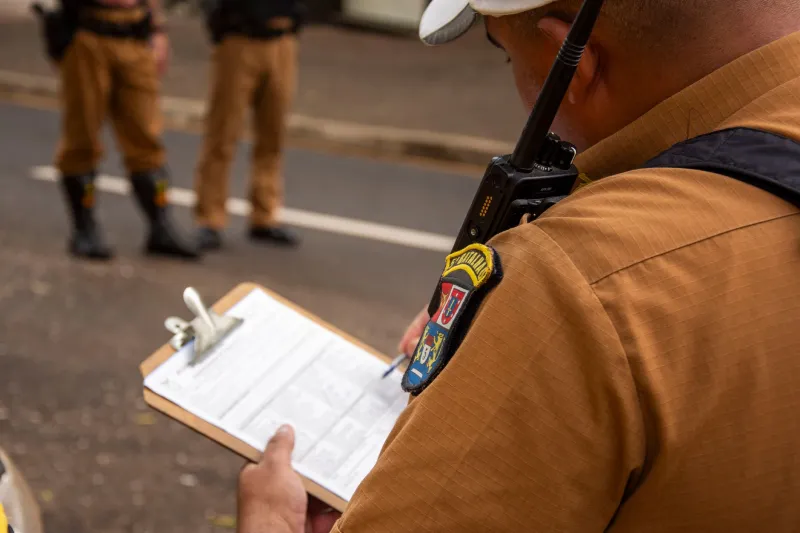
The methods these volunteer documentarians employ are deliberately low-technology and replicable. A core practice is the structured neighborhood walk, conducted on a regular schedule—weekly, biweekly, or monthly—during which participants photograph storefronts, note changes in signage or vacancy status, record posted rental prices from window listings, and document construction activity and building permit notices. These observations are entered into shared spreadsheets or simple databases that accumulate over time into a longitudinal record.
In Chicago's Pilsen neighborhood, a coalition of longtime residents began systematically photographing every commercial storefront on a defined set of blocks in 2018, building a visual archive that now spans several years. The photographs, organized chronologically by address, document the turnover of businesses with a specificity that no city database captures: the Mexican bakery replaced by a boutique fitness studio, the hardware store that became a wine bar, the sequence of vacancies that preceded a building's conversion to market-rate residential units.
In East Oakland, a community land trust has trained members to track rental listings on major platforms, recording asking prices by unit type and cross-referencing them against addresses where they have documented evictions or code enforcement activity. The resulting dataset, maintained entirely by volunteers, has become a resource for legal aid attorneys representing tenants in unlawful detainer proceedings.
What the Ledger Reveals
The knowledge produced by these archives is qualitatively different from what academic researchers or municipal agencies typically generate. It is faster—capturing changes as they occur rather than after they have been processed through administrative systems. It is more granular—specific to individual addresses rather than census tracts or zip codes. And it is embedded in local context that outside researchers rarely possess.
Consider the significance of knowing not merely that median rents in a neighborhood have increased by fifteen percent over two years, but that the increase was preceded by a specific sequence of events: a new transit stop announced, followed by a cluster of building sales to out-of-state LLCs, followed by a wave of renovation permits, followed by a pattern of code enforcement complaints that tenant advocates recognized as a prelude to displacement. Only a record maintained in real time, by observers present in the neighborhood, can capture that sequence with the specificity needed to make the causal argument.
Researchers at several universities have begun collaborating with community archivists precisely because this kind of longitudinal, address-level data is otherwise unavailable. Housing economists studying the mechanisms of gentrification have found citizen-collected records useful for testing hypotheses that aggregate data cannot adequately address.
Building the Archive as a Collective Practice
What distinguishes the most durable of these initiatives from informal documentation efforts is their organizational structure. The most effective citizen economic archives operate as genuine collaborative projects, distributing the labor of data collection across a group of trained participants and maintaining shared protocols that ensure consistency over time.
Training is a central investment. Participants learn how to record observations in a standardized format, how to distinguish between different categories of business change, how to interpret permit notices and property transfer records available through public databases, and how to maintain the archive's integrity when individual contributors come and go. This training is itself a form of civic education—one that builds participants' capacity to read the economic landscape of their own community with analytical precision.
Some groups have developed formal data dictionaries and observation protocols modeled on practices from academic social science, adapting them for use by participants without research backgrounds. The resulting discipline makes the archives more credible when their data is presented in public forums or submitted as evidence in policy proceedings.
The Politics of Knowing
Citizen economic archives are not neutral documents. They are produced by communities that have a direct stake in the changes they record, and they are frequently compiled with the explicit goal of supporting advocacy for equitable development, anti-displacement policy, or tenant protections. This situatedness is sometimes cited by critics as a source of bias; it is more accurately understood as a source of motivation and contextual knowledge that no outside researcher can replicate.
The question of who controls the archive—who can access it, how it is used, and who benefits from the knowledge it contains—is one that community archivists navigate carefully. Some groups maintain their records as internal organizing tools, sharing data selectively with legal advocates or sympathetic researchers while protecting the privacy of individual residents whose situations are documented. Others publish their findings openly, reasoning that transparency serves the broader public interest in understanding how neighborhoods change.
In either case, the act of building the archive is itself a claim about the community's right to produce authoritative knowledge about its own circumstances—a counter to the institutional tendency to define neighborhoods from the outside, through the lens of data systems that were not designed with those neighborhoods' interests in mind.
From Record to Resource
The most consequential measure of these archives is what they enable. In several cities, citizen-collected economic data has been presented at city council hearings on zoning variances, submitted to state housing agencies as evidence in fair housing complaints, and used by community land trusts to build the evidentiary case for expanded affordable housing programs.
The ledger keepers are not economists by training. They are neighbors, shopkeepers, faith community members, and longtime residents who have decided that the story of their neighborhood is worth recording carefully and preserving for the long term. In doing so, they are producing a form of knowledge that no government agency and no university research center has the local presence, the continuous attention, or the community trust to generate on its own.