Spores, Smartphones, and Shared Science: The Citizen Mycologists Mapping America's Hidden Fungal World
The Invisible Kingdom Beneath Our Feet
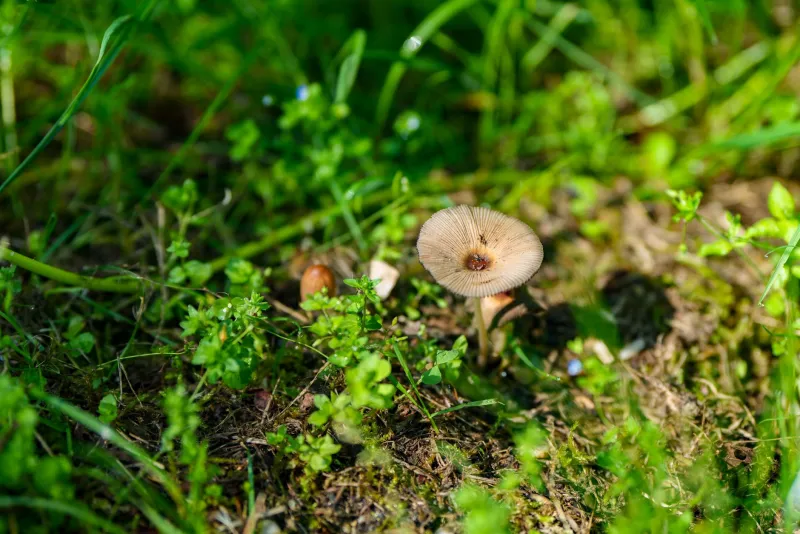
Fungi are everywhere. They thread through the soil beneath city parks, fruit from the bark of dying oaks, and colonize the leaf litter of forests that have never seen a mycologist's boot. Yet for all their ubiquity, the fungal kingdom remains one of the least documented branches of life on Earth. Estimates suggest that fewer than ten percent of the world's fungal species have been formally described by science — a gap so vast that professional researchers acknowledge they cannot close it alone.
Into that gap, an unlikely cohort has stepped forward: amateur mushroom enthusiasts who spend their weekends crouching over rotting logs, photographing gill structures with macro lenses, and uploading their findings to shared digital databases. What began, for many of them, as a hobby rooted in foraging for the table has quietly evolved into something that professional mycologists are beginning to take seriously — a distributed, citizen-powered effort to map the fungal diversity of the United States, region by region, ecosystem by ecosystem.
From Foragers to Field Scientists
The transition from recreational forager to contributing citizen scientist is rarely abrupt. For most participants, it begins with a simple desire to know what, exactly, they are looking at. A chanterelle is easy enough to recognize. But the broader fungal world — with its thousands of species, its taxonomic revisions, and its notorious capacity to confuse even experienced observers — demands a different level of engagement.
Local mycological societies have long served as the primary infrastructure for that deeper learning. Organizations such as the Mycological Society of San Francisco, the New York Mycological Society, and dozens of smaller regional clubs hold regular forays, offer identification workshops, and maintain mentorship networks that connect novices with experienced naturalists. These gatherings function, in effect, as informal field schools — places where observational skills are transmitted through direct practice rather than formal instruction.
In recent years, that infrastructure has been augmented by digital tools that extend the reach of collaborative identification well beyond any single club's membership. Applications such as iNaturalist have become central to the citizen mycology movement, allowing users to photograph a specimen, submit it with GPS coordinates and ecological notes, and receive identifications from a community of reviewers that includes both enthusiastic amateurs and credentialed professionals. The resulting dataset — millions of georeferenced fungal observations, growing daily — represents a form of distributed fieldwork that no university department could replicate through traditional means.
What the Data Is Revealing
The scientific value of this accumulating record is genuine and, in some respects, surprising. Mycologists studying the distribution of rare or poorly understood species have begun mining citizen databases for occurrence data that would otherwise require years of targeted fieldwork to assemble. Range extensions — instances where a species is documented far outside its previously known territory — are turning up with regularity, sometimes prompting formal taxonomic investigations.
Conservation biologists have found the data particularly useful. Fungal species that serve as indicators of old-growth forest health, or that form essential mycorrhizal partnerships with threatened tree species, are difficult to monitor through conventional survey methods. Citizen observations, aggregated across time and geography, provide a longitudinal record that can reveal population trends invisible at the scale of any single field season.
Researchers at several land-grant universities have begun formal collaborations with regional mycological societies, designing structured data-collection protocols that allow citizen observations to meet the methodological standards required for publication. These partnerships represent a meaningful shift in how academic mycology relates to the broader public — one in which nonprofessional participants are treated not merely as data-entry volunteers, but as genuine contributors to the scientific enterprise.
The Tension Between Access and Accuracy
Not everyone in the mycological community greets this democratization with unqualified enthusiasm. The concerns are not trivial. Fungi present identification challenges that differ in kind, not merely degree, from those posed by birds or wildflowers. Morphological similarity between edible and toxic species can be extreme; the consequences of misidentification range from severe gastrointestinal illness to fatal liver failure. Several North American species in the Amanita genus — among them the death cap and the destroying angel — are responsible for the majority of fatal mushroom poisonings worldwide.
Experienced mycologists worry that the accessibility of identification apps may create a false sense of confidence among newer foragers. Artificial intelligence-based identification tools, while improving rapidly, still carry error rates that are unacceptable when the stakes involve human health. A photograph, however detailed, cannot capture the full suite of sensory and contextual information — spore print color, odor, substrate, geographic context — that a confident identification often requires.
Responsible citizen mycology organizations have responded to these concerns with deliberate educational frameworks. Most reputable clubs enforce a clear distinction between foraging for consumption and collecting for documentation, and they emphasize that identification for the table must always involve in-person verification by an experienced mentor before any specimen is eaten. The ethos, at its best, is one of structured humility: curiosity is encouraged, but certainty is earned slowly, through accumulated experience and community accountability.
Building a Commons of Fungal Knowledge
The broader significance of the citizen mycology movement extends beyond any individual dataset or conservation application. It represents an emerging model for how scientific knowledge about the natural world can be built and maintained in an era of constrained institutional resources.
Professional mycology, like many natural history disciplines, has contracted in recent decades. Herbarium collections have faced budget cuts; field courses have been reduced; taxonomy positions at universities have gone unfilled. The knowledge required to identify, document, and understand fungal diversity is, in a very real sense, at risk of being lost — not because the organisms are disappearing, though many are, but because the human infrastructure for studying them has eroded.
Citizen mycologists are not a replacement for professional training. They are, however, a form of distributed institutional memory — a community of practice that keeps observational skills alive, that introduces new generations to the discipline, and that generates the raw data upon which more formal analysis depends. In this respect, the movement exemplifies a principle that learning organizations across many domains have come to recognize: that knowledge, to remain vital, must be shared, practiced, and continuously renewed by communities that extend well beyond credentialed experts.
The fungal world has always operated through networks — the mycorrhizal webs that connect trees across forest floors, the decomposer communities that cycle nutrients through soil. It is perhaps fitting that the effort to understand that world is itself becoming networked, distributed, and collaborative. The atlas being assembled, one photograph at a time, is incomplete and always will be. But it is growing, and the people building it are learning as they go.