Against the Infinite Scroll: In Defense of the Small Town Reading Room
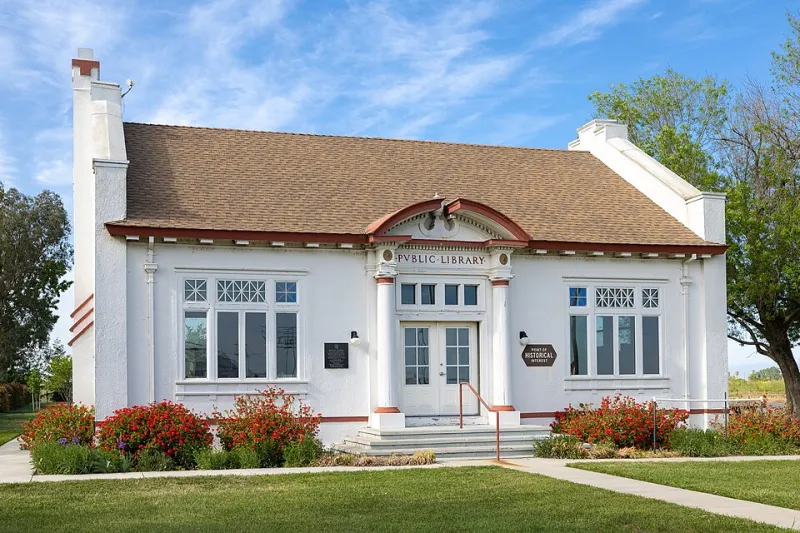
Photo: Frank Schulenburg, CC BY-SA 4.0, via Wikimedia Commons
The algorithm has a singular answer to every question: more. More content, more recommendations, more tabs. And yet the American loneliness epidemic deepens, and trust in shared information erodes. I want to make an unfashionable argument: part of the remedy is sitting on a wooden shelf in a room the size of a two-car garage, staffed by volunteers, in towns most tech companies have never mapped.
I visited three of them in the past year. Here is what I found.
The Room That Knows Your Name
In a converted storefront in rural Kansas, a reading co-op operates on an honor system: take a book, leave a note, return when you can. The volunteer who keeps the ledger knows which widow is reading through the westerns and which teenager just discovered astronomy. This is not a service feature. It is a form of attention that no recommendation engine can replicate, because it is not a recommendation at all — it is a relationship.
Sociologists call these third places: spaces that are neither home nor work, where community is practiced rather than performed. Reading rooms are third places with a curriculum.
The Shelf as a Filter
The second library, in a Vermont village of fewer than a thousand people, stocks perhaps three thousand titles. That sounds like poverty next to an infinite catalog. It is the opposite. A small collection curated by people who live among their readers functions as a filter with accountability. Someone chose that book, stands behind it, and will discuss it with you at the counter. The algorithm's filter, by contrast, optimizes for engagement and answers to no one you can meet.
In an age of information overload and synthetic content, the finite, human-curated shelf is not a limitation. It is a standard.
The Civic Argument
The third room, attached to a grange hall in the Carolinas, doubles as a meeting space: tax-help nights, a seed exchange, a monthly discussion group that recently read — of all things — a book about deliberative democracy. The reading room is not merely a place where civic life happens nearby. It is a place where civic life is rehearsed, in low-stakes, face-to-face encounters that build the habits democracy requires.
Critics will object that volunteer reading rooms cannot scale. That is precisely the point. They are civic infrastructure the way a front porch is civic infrastructure: valuable because they are local, finite, and personally tended.
What Defending Them Requires
Defense looks like small things. County boards protecting modest line items. Volunteers showing up on Saturday mornings. Donations of shelving, and of time. It also looks like resisting the assumption that digital access substitutes for physical gathering — they are complements, not competitors.
The town that reads together is not nostalgic; it is practicing a discipline. The infinite scroll offers everything and requires nothing. The reading room offers three thousand books and asks that you know your neighbors. I know which one I would defend.