Fa So La: The Volunteers Racing to Archive America's Oldest Living Songbook Tradition
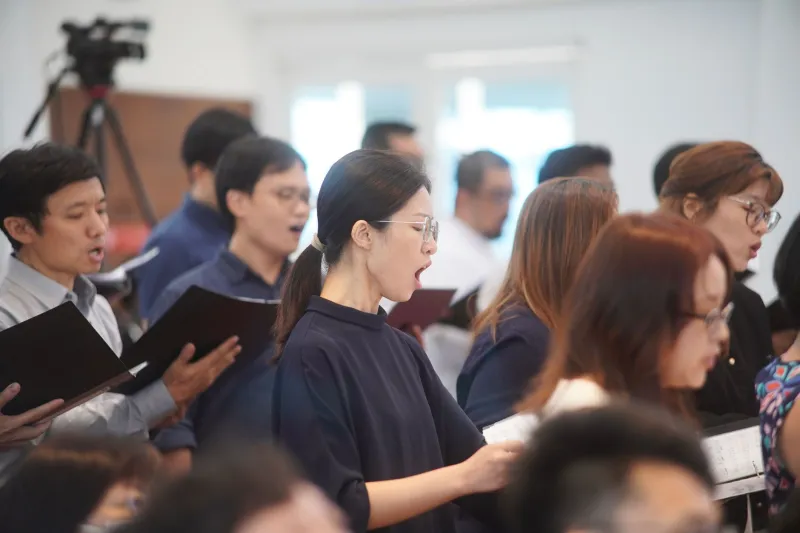
The syllables come first, always. Before the words of the hymn, a roomful of singers will vocalize a cascade of fa, sol, la, mi — four syllables mapped onto four geometric shapes printed beside the musical notation. It is a pedagogical system older than the phonograph, the radio, and the recording studio, and for two centuries it has kept a distinctive American singing tradition alive in rural churchhouses across the South.
Now a loose coalition of volunteers — singers, retired librarians, amateur archivists, and weekend scanners — is working to make sure the tradition survives not just in the rooms where it is sung, but in a form anyone with an internet connection can join.
A Tradition Built for Ordinary People
Shape-note singing emerged in the early American republic as a music-education movement for people who could not afford formal training. The 1844 hymnal The Sacred Harp, still the tradition's central songbook, was designed so that a farmer, a schoolteacher, or a mill worker could sight-read a melody on first attempt. Singers sit in a hollow square, faces turned inward, taking turns leading songs in a raw, open-throated style that prizes participation over polish.
The tradition has always been participatory by design. What is new is the participatory archiving.
Scanning the Fragile Record
Nineteenth-century hymnals do not age gracefully. Printed on acidic paper and bound with thread that has spent generations in humid Southern attics, many surviving copies are brittle enough that a careless page turn can destroy a song. Volunteer teams have begun partnering with families and small congregations to digitize these collections before they deteriorate further, using flatbed scanners and even smartphone rigs to capture high-resolution images of every page.
The work is painstaking and largely unglamorous. A single hymnal can take weeks to photograph, catalog, and upload. But the resulting open digital libraries have already changed the geography of the tradition. A singer in Oregon can now study an obscure 1850s composition that once circulated only among a handful of Georgia families.
Recording the All-Day Singing
Digitizing songbooks preserves the notes. Recording the singings preserves the practice.
Annual all-day singings — marathon sessions where singers work through hundreds of pages, dinner on the grounds at noon — remain the beating heart of the tradition. Volunteer recordists now attend these gatherings with unobtrusive equipment, capturing not only the music but the leaders' calls, the pitch-pipe rituals, and the announcements that knit each event together. Several long-running singings that were never documented before now have complete audio records, archived for researchers and future singers alike.
Some volunteers go further, interviewing elder singers about the lineage of their chapters, the teachers who shaped them, and the songs their grandparents favored. These oral histories may prove as valuable as any hymnal.
From Isolated Chapters to a National Commons
The most striking development is collaborative transcription. Distributed online projects allow volunteers to transcribe obscure regional songbooks — many printed in tiny runs and never reissued — into modern notation and shape-note formats. Each transcribed page is checked by multiple contributors, then released freely.
The effect has been a quiet democratization. A tradition once sustained by a few dozen rural chapters now supports hundreds of singings across the country, many organized by newcomers who learned the shapes from digitized archives before ever attending a singing. Scholars note that the tradition is, by some measures, growing rather than shrinking — a rarity among American folk practices.
Knowledge as a Shared Table
The lesson extends beyond music. Shape-note singing was invented as a commons: a method that assumed ordinary people, given the right tools, could master complex knowledge together. The volunteers scanning, recording, and transcribing today are honoring that premise. They are not preserving a relic; they are keeping an invitation open — one that anyone, anywhere, can answer by learning four shapes and finding a seat in the square.