Voices Before They Vanish: The Volunteer Oral Historians Rescuing Marginalized Neighborhoods From Erasure
The Stories That Official Records Leave Behind
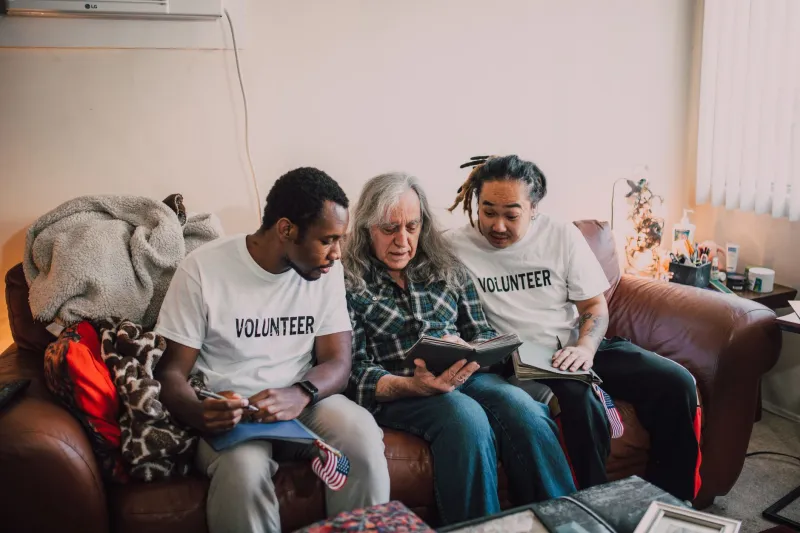
In a church basement in Richmond, Virginia, a retired schoolteacher named Doris sits across from a woman she has known for forty years. Between them rests a small digital recorder. Over the next two hours, the older woman will describe the block-by-block geography of a neighborhood that no longer exists in any recognizable form—the corner store where credit was quietly extended to families short on rent money, the church choir that functioned as an informal employment network, the unwritten rules of mutual aid that governed daily life before the bulldozers arrived.
No university historian scheduled this interview. No government grant funded the recorder. The project was organized by a small volunteer collective, trained over a single weekend, and sustained entirely by the commitment of people who understood that if they did not capture these accounts now, they would be lost.
This scene is playing out with increasing frequency in cities and towns across the country. A quiet but consequential movement of grassroots oral historians is building what many participants call a counter-archive—a systematic, community-held record of experiences that mainstream institutional history has consistently failed to document.
Why Institutional History Falls Short
The limitations of official historical archives are well understood by scholars, yet they persist. County courthouses record property transfers; they do not record the emotional cost of displacement. Newspaper archives preserve the perspectives of those with access to print; they rarely reflect the interior lives of communities that existed, in large part, outside the dominant culture's field of attention.
For neighborhoods shaped by redlining, urban renewal, mass incarceration, immigration enforcement, or simple economic abandonment, the gap between lived experience and documented history can be vast. Elders in these communities carry knowledge that is irreplaceable—not merely sentimental, but historically precise. They remember which institutions served which populations, how informal economies functioned, how families navigated systems designed to exclude them. When those elders die without having been interviewed, that knowledge disappears entirely.
The urgency is compounded by the pace of contemporary urban transformation. Gentrification in cities from Portland to Atlanta to Philadelphia is accelerating the dispersal of long-established communities, scattering residents before their collective memory can be gathered. Volunteer oral history projects have emerged, in part, as a direct response to this pressure.
How Volunteer Networks Operate
The organizational structures of these projects vary considerably, but several common elements have emerged across successful initiatives. Most begin with a training phase in which community members—often with no prior research experience—learn the foundational skills of oral history practice: how to construct an open-ended interview guide, how to create conditions of trust and comfort, how to operate recording equipment, and how to handle sensitive disclosures responsibly.
Many groups draw on resources developed by the Oral History Association, which has increasingly oriented its professional guidance toward community-based practitioners. Others have developed their own curricula through trial and experience, refining their methods across dozens of interviews.
Transcription presents one of the most labor-intensive challenges. Audio recordings are only as useful as the access they enable, and making interviews searchable and citeable requires converting spoken language into text—a process that demands both time and care. Several projects have addressed this through transcription circles, in which volunteers gather regularly to divide the work, cross-check one another's drafts, and flag passages that may require additional context or sensitivity review.
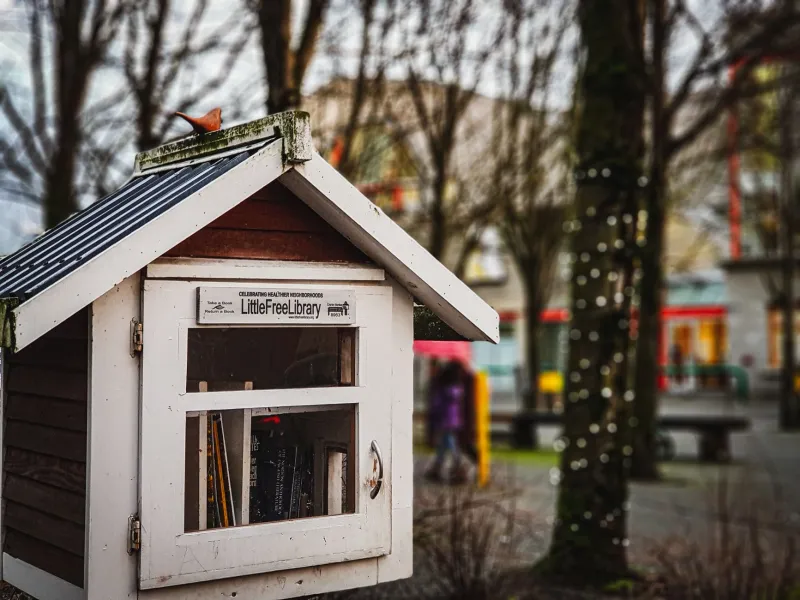
Digital archiving has transformed what these projects can accomplish. Platforms designed for collaborative document management allow geographically dispersed volunteers to contribute to a shared collection without requiring centralized institutional infrastructure. Some projects have partnered with local public libraries or community colleges to host their archives, lending the collections a degree of institutional stability while preserving community ownership over access and interpretation.
Centering the Narrator, Not the Researcher
What distinguishes the best of these projects from more conventional historical research is a deliberate inversion of the traditional power relationship between interviewer and subject. In community-led oral history work, the narrator is understood not as a source to be mined but as a knowledge holder whose authority over their own experience is paramount.
This philosophy manifests in concrete practices. Narrators are typically given the opportunity to review their transcripts before they are archived, to correct misrepresentations, and to restrict access to portions of their accounts that they consider private or potentially harmful. Some projects use tiered access systems, making certain interviews available to the general public while reserving others for community members or future family researchers.
The act of being interviewed is itself understood as meaningful. Participants in these projects frequently report that the experience of having their accounts treated as historically significant—of being told, in effect, that what they know matters—carries emotional weight that extends beyond the practical value of the archive. For communities whose experiences have been systematically minimized, that recognition is not incidental.
Building Knowledge That Communities Can Use
Oral history archives are not merely commemorative. The accounts gathered by these volunteer networks have practical applications that their creators are increasingly learning to leverage.
In several cities, community organizations have drawn on oral history documentation to support claims in land use disputes, providing evidence of long-term residency and neighborhood character that challenges redevelopment narratives. In others, schools have integrated locally produced oral histories into curricula, giving students access to a version of their neighborhood's past that differs substantially from what any textbook contains.
There is also a dimension of intergenerational knowledge transfer that these projects facilitate. When a teenager serves as an interviewer for a neighbor in their eighties, something more than historical documentation occurs. A relationship is formed across a generational gap that urban life often leaves unbridged. The knowledge exchanged in that conversation—practical, emotional, historical—does not remain confined to the archive.
The Collaborative Imperative
No single volunteer, however dedicated, can undertake this work alone. The projects that endure are those that have built genuine collaborative infrastructure: shared training, distributed labor, collective decision-making about what to collect and how to preserve it. They are, in a meaningful sense, learning organizations—communities that are simultaneously producing knowledge and developing the capacity to produce more of it.
The stakes of this work are difficult to overstate. The United States is a nation whose official historical record reflects, with considerable fidelity, the perspectives of those who held power at the time that record was being constructed. The communities now building their own archives are not merely filling gaps in that record. They are asserting that the gaps were never neutral—that what was left out was left out for reasons, and that recovering it requires deliberate, organized, community-centered effort.
The recorder in that church basement in Richmond is, in this light, a tool of something larger than memory. It is an instrument of historical justice, operated by ordinary people who have decided that the story of their neighborhood is worth the work of saving.